
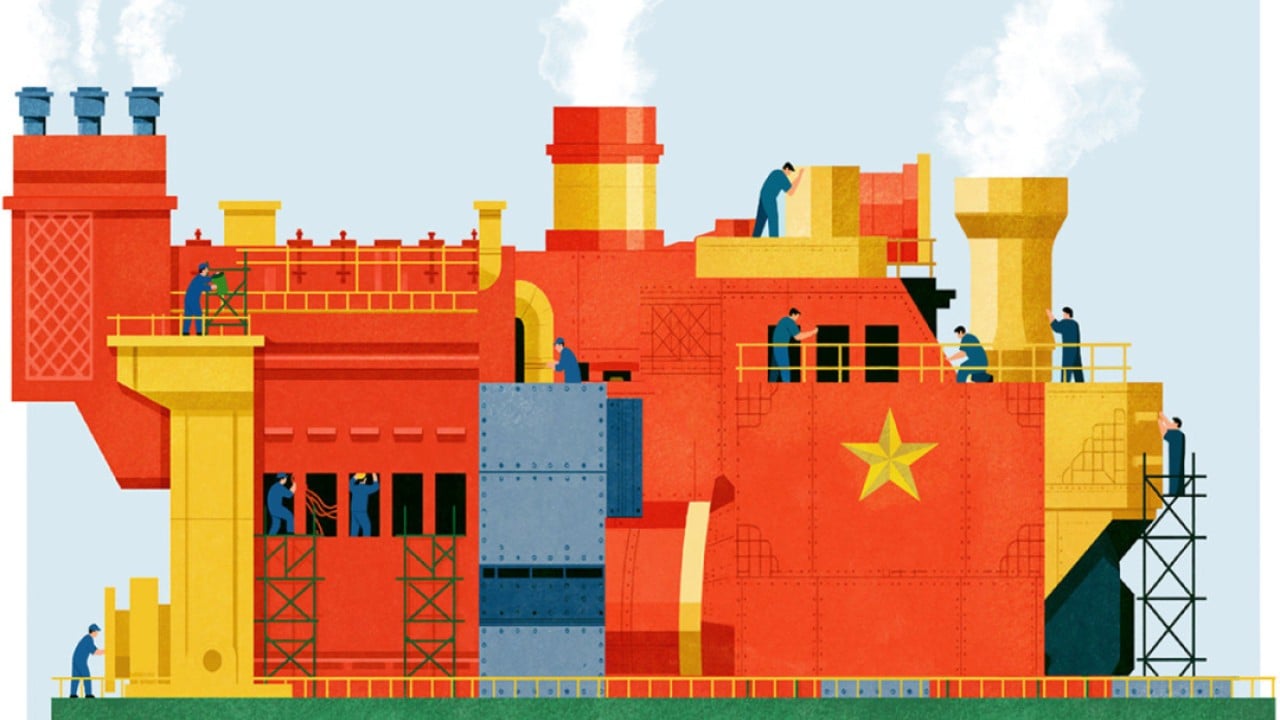
Analysis: China’s Industrial Expansion Challenges Global Trade Norms
China is currently shifting from low-end manufacturing to high-tech sectors like electric vehicles and semiconductors. This transition has triggered international concerns regarding overcapacity and the effectiveness of trade barriers.
Market Narrative Detected
The narrative suggests that China's technological dominance is an unstoppable force, which benefits investors looking for long-term growth in Chinese tech while potentially discouraging those betting on Western protectionist policies.
The global economic landscape is currently navigating what some analysts describe as 'China shock 2.0.' Unlike the initial wave of Chinese industrialization in the 1990s, which focused on low-cost consumer goods, the current phase is characterized by a strategic pivot toward advanced technology. China has established a dominant position in the production of electric vehicles (EVs), lithium-ion batteries, solar panels, and sophisticated semiconductors.
This industrial shift has created significant friction in international trade relations. Many Western nations view this surge in production as a threat to their domestic manufacturing bases, leading to the implementation of tariffs and export controls intended to curb the influx of Chinese goods. However, the efficacy of these measures remains a subject of debate. While some policymakers argue that trade barriers are essential to protect domestic industries from being undercut by state-subsidized competition, others suggest that China’s industrial engine is too deeply integrated into global supply chains to be easily slowed by such restrictions.
The core of the disagreement lies in whether these developments represent a standard evolution of global trade or a deliberate attempt by China to monopolize key future industries. While the SCMP report highlights that these industries are often perceived as a 'trade problem' due to overproduction, it stops short of predicting the ultimate success of Western interventionist policies. The situation remains fluid, with global markets attempting to balance the benefits of cheaper, advanced technology against the risks of industrial dependency on a single nation.
📡 Media Analysis
How each outlet framed the story — angles, word choices, and what they chose to push or ignore.
Frames China's industrial growth as an inevitable evolution that trade barriers struggle to contain.
"China shock 2.0"
✓ Only outlet to report: Identified the specific shift from low-end manufacturing to high-tech sectors like EVs and semiconductors as the defining feature of the current trade tension.
⚡ Where Sources Disagree
- ·The effectiveness of tariffs and export controls in altering China's industrial trajectory.
🔍 What Nobody's Reporting
- ·Lack of perspective from Western manufacturing lobbyists regarding the specific economic impact of these imports.
- ·Absence of data on the actual volume of state subsidies versus market-driven efficiency in Chinese high-tech sectors.
📰 Sources
0 A-rated source(s) among 1 total. Lowest trust: SCMP (B)