
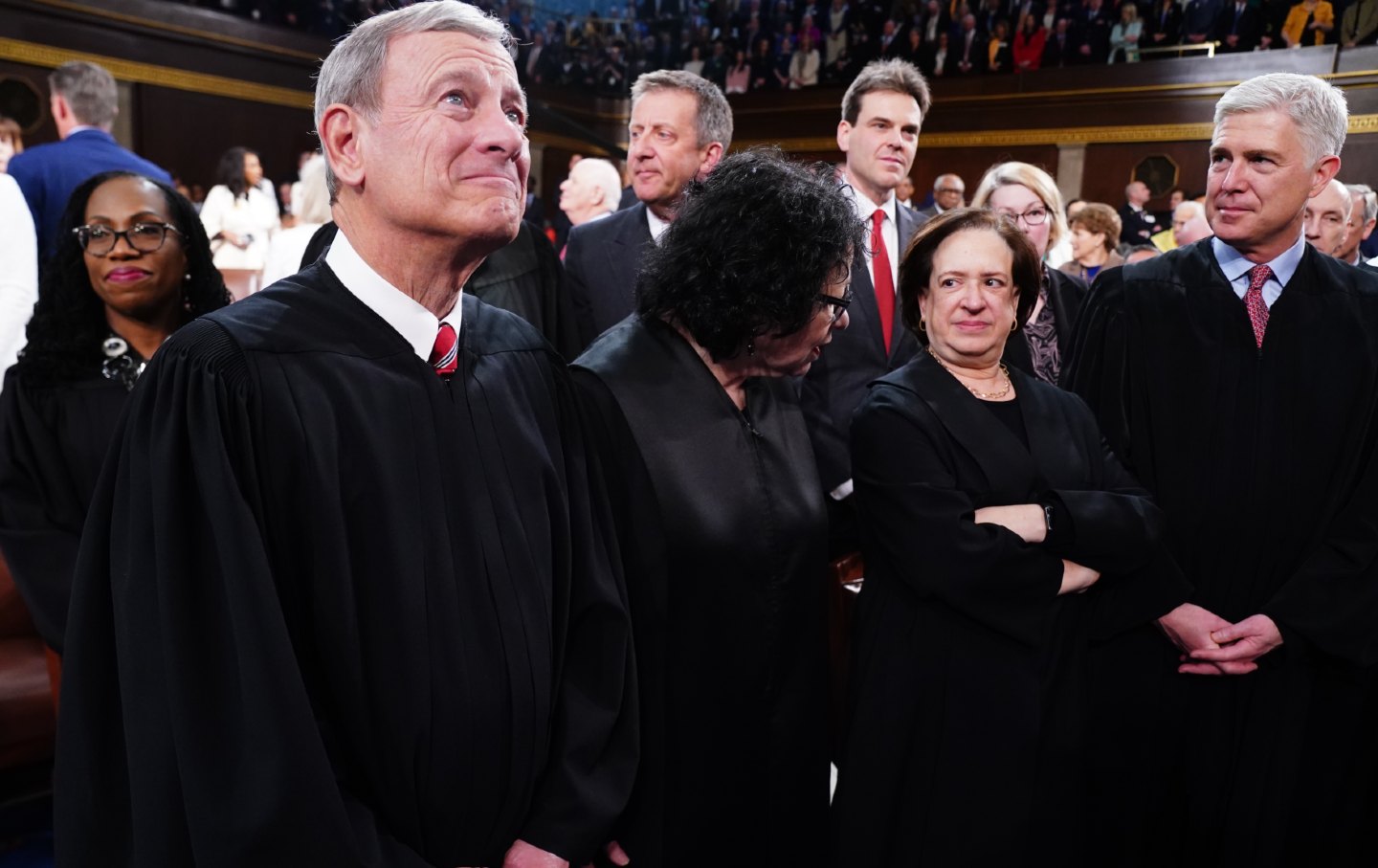
Analysis of Chief Justice John Roberts’s Judicial Philosophy
Legal commentator Elie Mystal has proposed a new theory regarding the judicial decision-making process of Chief Justice John Roberts. The analysis explores the motivations and patterns behind Roberts's rulings on the Supreme Court.
In a recent commentary, Elie Mystal offers an assessment of Chief Justice John Roberts’s jurisprudence, attempting to categorize the underlying logic that guides his votes on the Supreme Court. Mystal’s analysis suggests that Roberts’s approach to the law is driven by a specific set of institutional and ideological priorities that influence his interpretation of constitutional issues.
While the specific details of Mystal’s theory are framed within his broader critique of the current Court, the core argument posits that Roberts’s judicial behavior is not merely a product of traditional legal conservatism, but rather a strategic effort to manage the Court’s public standing and institutional power. Mystal argues that Roberts often balances his conservative leanings with a desire to maintain the appearance of judicial moderation, a tactic that has become a focal point for observers of the Court’s recent term.
Because the provided source is an opinion-based commentary rather than a news report, it does not present a consensus view or cite opposing legal scholars. Consequently, the theory remains a subjective interpretation of the Chief Justice’s record rather than a universally accepted legal framework. The analysis serves as a reflection of the ongoing debate regarding how the Chief Justice’s personal philosophy shapes the trajectory of American law.
📡 Media Analysis
How each outlet framed the story — angles, word choices, and what they chose to push or ignore.
Framed the Chief Justice's legal philosophy through a critical, opinion-based lens.
"mourns the end of summer—and the world"
✓ Only outlet to report: The specific framing of Roberts's jurisprudence as a 'new theory' developed by the author.
⚡ Where Sources Disagree
- ·There are no points of contention as only one source was provided for analysis.
🔍 What Nobody's Reporting
- ·Lack of response or alternative perspectives from legal scholars or the Chief Justice's office.
- ·Absence of specific case law examples to support the 'new theory' mentioned in the headline.
📰 Sources
0 A-rated source(s) among 1 total. Lowest trust: The Nation (B)