
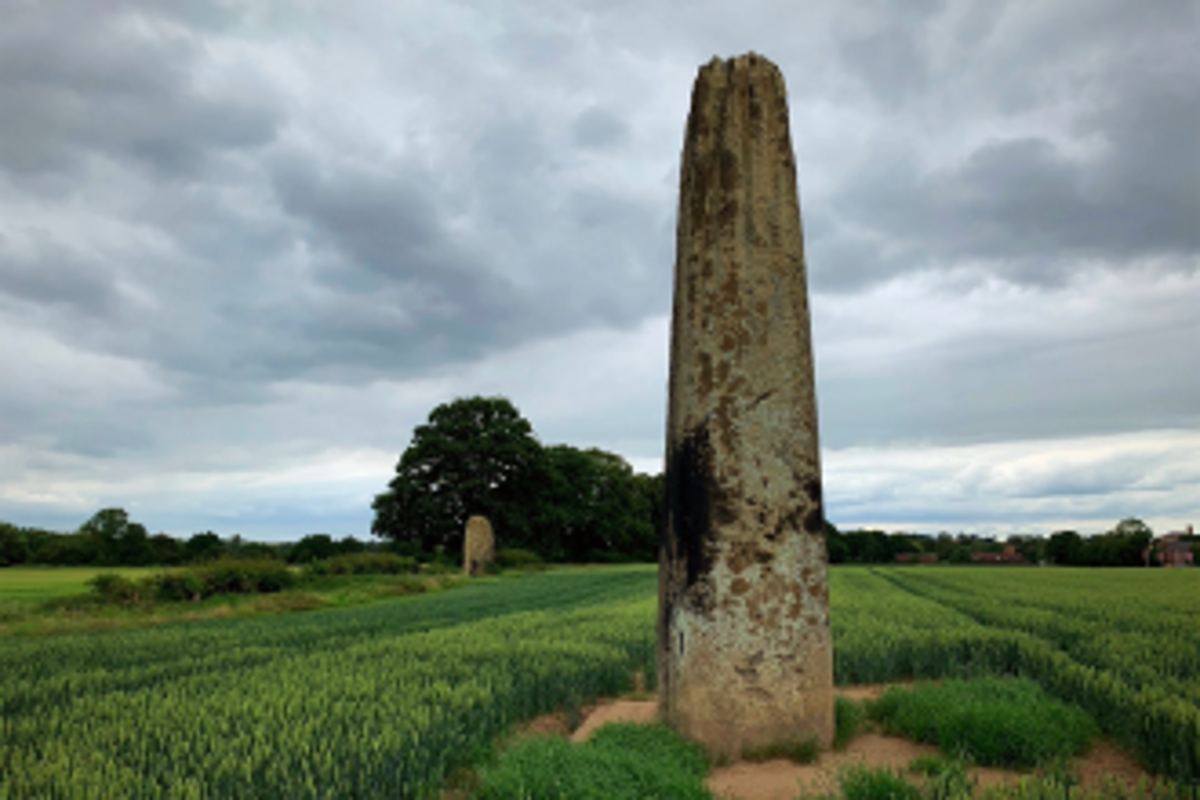
Archaeologists determine origins of prehistoric Devil’s Arrows stone row in Britain
New research reveals that prehistoric builders transported 25-tonne stones from a source 18 kilometers away to construct the Devil’s Arrows monument. The study suggests these sites were selected for their symbolic significance rather than ease of transport.
A recent archaeological study has shed light on the construction of the Devil’s Arrows, a prominent row of megalithic stones located in North Yorkshire, England. Researchers have confirmed that the builders moved massive stones, weighing up to 25 tonnes each, across a distance of approximately 18 kilometers to reach the site.
The findings challenge the assumption that prehistoric construction projects were driven primarily by logistical efficiency. Instead, the study posits that the builders prioritized specific locations for their cultural or personal meaning. By choosing stones from a source nearly 20 kilometers away, the ancient population demonstrated a significant investment of labor and resources, suggesting that the stones themselves held deep importance to the community that erected them.
While the study provides clarity on the distance traveled, it does not definitively explain the specific methods used to transport such heavy materials across the prehistoric landscape. The research highlights a shift in archaeological understanding, moving away from viewing ancient builders as purely pragmatic and toward recognizing the complex social and symbolic motivations behind their architectural feats.
📡 Media Analysis
How each outlet framed the story — angles, word choices, and what they chose to push or ignore.
Framed the construction as a deliberate, symbolic choice rather than a simple engineering task.
"personal meaning"
🔍 What Nobody's Reporting
- ·Lack of detail regarding the specific geological testing methods used to trace the stones.
- ·Absence of information on the estimated time period or specific culture responsible for the construction.
📰 Sources
0 A-rated source(s) among 1 total. Lowest trust: The Independent (B)