
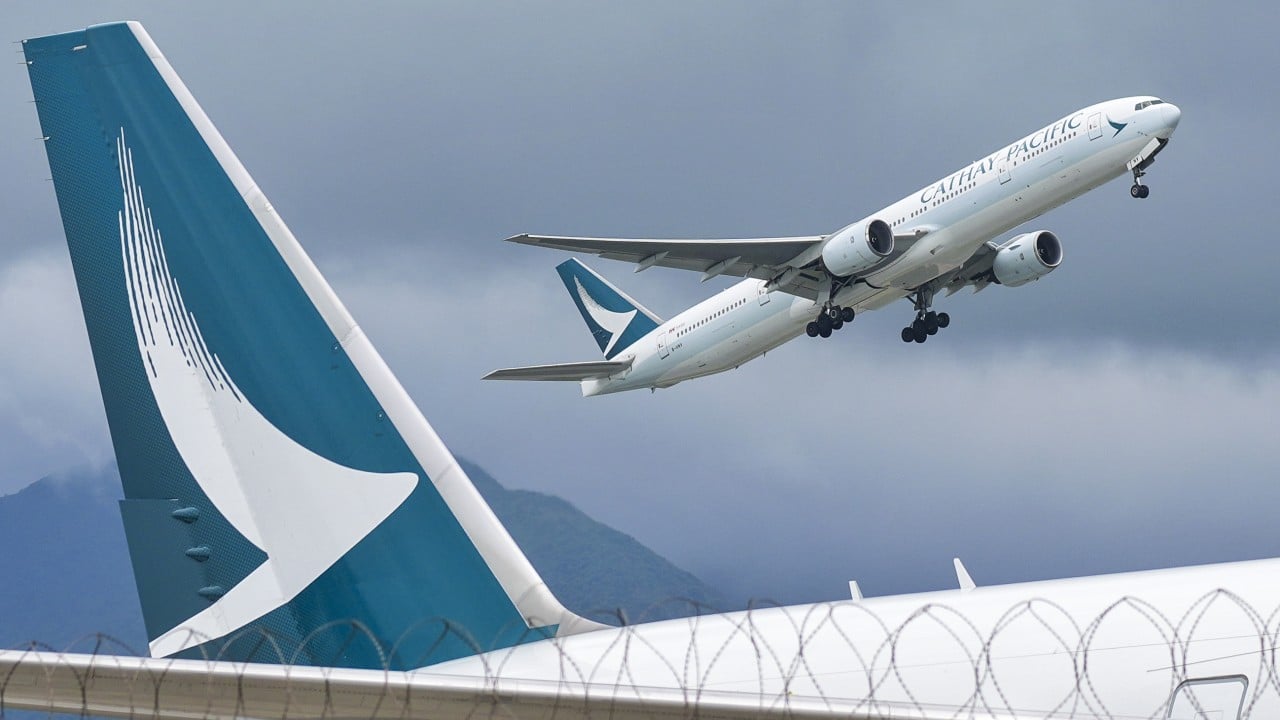
Cathay Pacific Reports 71% Profit Increase for First Half of 2026
Cathay Pacific Airways announced a net profit of HK$6.24 billion for the first half of 2026, marking a 71% increase compared to the same period last year. The airline attributed the growth to strong travel demand, though leadership warned that rising fuel costs due to Middle Eastern tensions remain a concern.
Market Narrative Detected
The narrative suggests that legacy carriers are successfully capitalizing on post-pandemic travel demand, benefiting shareholders and investors. This benefits the airline's stock valuation by framing the company as a resilient, recovering asset.
Cathay Pacific Airways has released its interim financial results for the first half of 2026, showing a significant financial recovery with a net profit of HK$6.24 billion (US$802 million). This represents a 71% increase year-on-year, a performance the company credits to sustained high demand for air travel.
Guy Bradley, serving as Cathay Group chairman for his first interim results announcement, provided context regarding the airline's operational challenges. While the company benefited from a temporary dip in jet fuel prices during the second quarter, Bradley noted that these costs are beginning to climb again. He explicitly linked this renewed upward pressure on fuel prices to the escalating geopolitical tensions in the Middle East, which could impact future profit margins.
The report highlights a period of stabilization for the carrier following previous years of volatility. While the headline figures indicate strong growth, the management's commentary suggests a cautious outlook for the remainder of the year, specifically regarding the unpredictability of fuel expenses and global supply chain stability.
📡 Media Analysis
How each outlet framed the story — angles, word choices, and what they chose to push or ignore.
Focused on the raw financial growth figures while providing context on operational headwinds.
"escalating tensions in the Middle East"
🔍 What Nobody's Reporting
- ·Lack of detail on passenger load factors or specific route performance.
- ·No mention of how the company plans to hedge against the mentioned fuel price volatility.
- ·Absence of comparative data regarding competitor performance in the same region.
📰 Sources
0 A-rated source(s) among 1 total. Lowest trust: SCMP (B)