
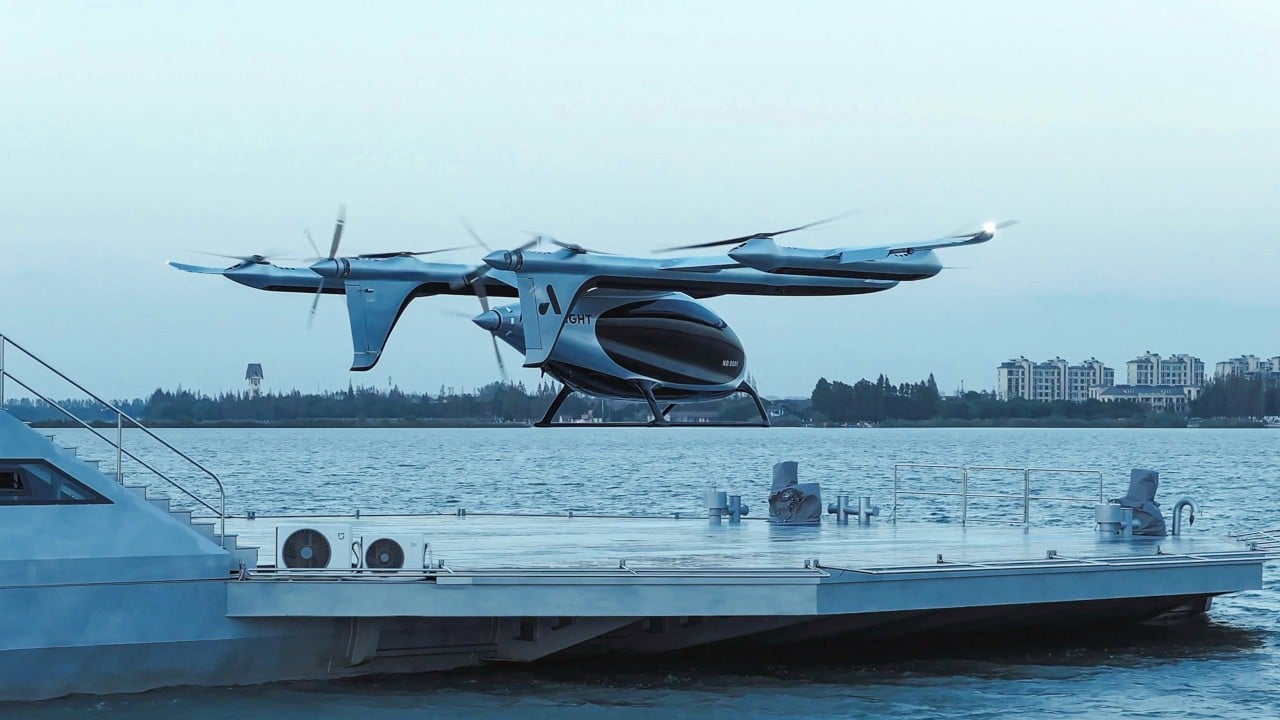
CATL Announces Aviation Battery Breakthrough for Potential Flying Car Market
CATL has successfully tested a new high-energy-density battery system designed for electric vertical take-off and landing (eVTOL) aircraft. The company aims to leverage its manufacturing scale to advance the commercial viability of flying cars in China.
Market Narrative Detected
The narrative suggests that China is winning the 'future of mobility' race through massive industrial scaling, which benefits investors in Chinese tech and green energy sectors by signaling long-term growth.
Contemporary Amperex Technology Ltd (CATL), the world’s largest electric vehicle battery manufacturer, has announced that its new aviation-grade battery system has passed safety and performance testing. The company claims this technology is now ready for mass production, marking a significant step toward the commercialization of electric vertical take-off and landing (eVTOL) vehicles, often referred to as flying cars.
Industry analysts suggest that CATL’s entry into the aviation space could solidify China’s dominance in the global renewable energy and future mobility sectors. By applying its existing manufacturing expertise from the EV market to aviation, CATL intends to solve the energy density and safety hurdles that have historically hindered the development of passenger-carrying drones. While the company has confirmed the technology is ready for production, specific timelines for widespread commercial integration or partnerships with aircraft manufacturers remain in the early stages. The move is viewed as a strategic pivot to expand CATL’s influence beyond ground-based transportation and into the emerging low-altitude economy.
📡 Media Analysis
How each outlet framed the story — angles, word choices, and what they chose to push or ignore.
Focused on the potential for national industrial dominance and the technical readiness of the product.
"thrown its weight behind flying cars"
✓ Only outlet to report: Reported that the aviation battery system has officially cleared safety tests and is ready for mass production.
🔍 What Nobody's Reporting
- ·Lack of information regarding the specific energy density metrics compared to existing aviation batteries.
- ·No mention of the regulatory hurdles or air traffic control infrastructure required to make flying cars a reality.
- ·Absence of potential risks or failure rates associated with the new battery chemistry.
📰 Sources
0 A-rated source(s) among 1 total. Lowest trust: SCMP (B)