
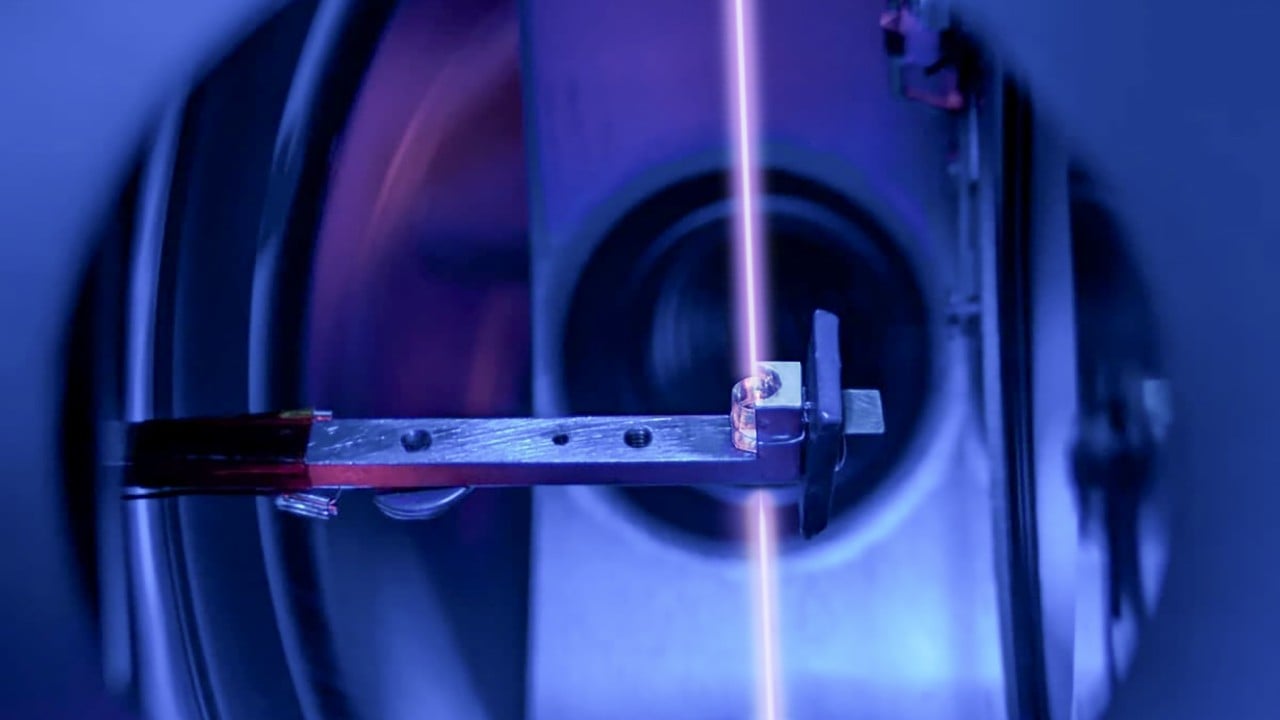
China and Austria Develop World's First Nuclear Clocks Using Thorium-229
Researchers in China and Austria have independently developed the world's first nuclear clocks using thorium-229 nuclei. Initial studies published in Nature indicate that the Chinese prototype currently demonstrates higher stability than the Austrian version.
Scientists have achieved a significant milestone in timekeeping technology by creating the first functional nuclear clocks. Unlike traditional atomic clocks, which rely on the vibrations of electrons orbiting an atom, these new devices utilize the steady rhythm of the thorium-229 nucleus embedded within a crystal. This transition from electron-based to nucleus-based timekeeping is expected to provide unprecedented precision.
Two separate research teams—one led by Tsinghua University in Beijing and another based at TU Wien in Vienna—published their findings simultaneously in the journal Nature. While both teams successfully demonstrated the technology, the data suggests a difference in performance. According to the published papers, the Chinese team’s prototype is approximately six times more stable than the model developed by the researchers in Vienna.
Nuclear clocks are considered a major leap forward in physics because the nucleus is less susceptible to external interference, such as electromagnetic fields, compared to the outer electrons used in current standard clocks. This stability could eventually lead to more accurate GPS systems, improved deep-space navigation, and new methods for testing fundamental laws of physics. While the Chinese prototype currently holds a lead in stability metrics, both teams have proven the viability of the thorium-229 approach, marking a new era in precision measurement.
📡 Media Analysis
How each outlet framed the story — angles, word choices, and what they chose to push or ignore.
Focused on the competitive aspect of the scientific achievement by highlighting the stability gap.
"beats Vienna’s on stability"
✓ Only outlet to report: Reported that the Chinese team was led by Tsinghua University.
⚡ Where Sources Disagree
- ·The relative stability of the two prototypes, with SCMP reporting the Chinese version is six times more stable than the Austrian version.
🔍 What Nobody's Reporting
- ·Lack of technical context regarding why the Chinese prototype achieved higher stability.
- ·Absence of commentary from independent physicists on the long-term scalability of these specific crystal-based designs.
📰 Sources
0 A-rated source(s) among 1 total. Lowest trust: SCMP (B)