
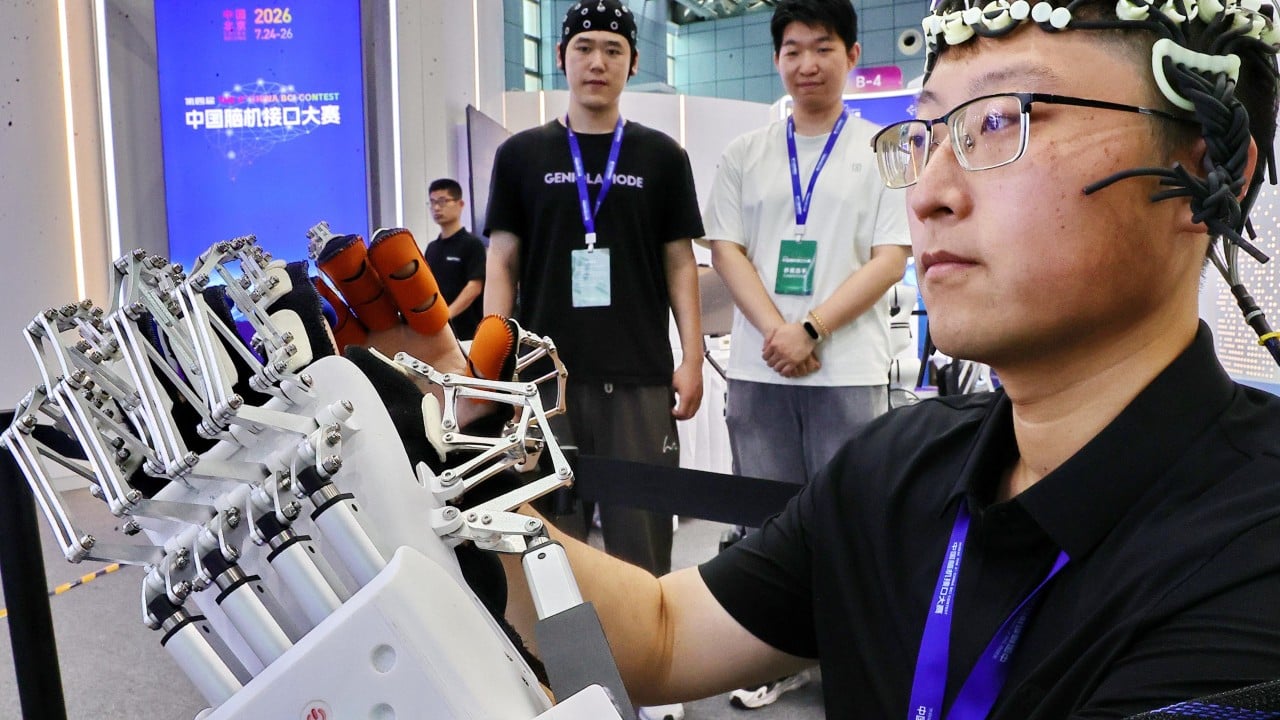
China Announces New Standards to Accelerate Brain-Computer Interface Development
China’s Ministry of Industry and Information Technology has released draft guidelines to establish over 40 standards for brain-computer interface (BCI) technology by 2028. The initiative aims to foster commercial growth and position domestic firms as global competitors to Elon Musk’s Neuralink.
Market Narrative Detected
The narrative suggests a 'technological arms race' where state-backed standards are the key to winning the future of neurotech. This benefits government planners and domestic tech firms by creating a sense of inevitable progress and investment-worthiness.
The Chinese government is moving to formalize the brain-computer interface (BCI) industry through a new regulatory framework. According to the Ministry of Industry and Information Technology (MIIT), the goal is to create or revise more than 40 national standards for the sector by 2028. This move is designed to encourage at least 100 companies to adopt these standardized practices, effectively creating a roadmap for the commercialization of neurotechnology.
This policy push reflects a broader strategic effort to compete with international leaders in the field, specifically Elon Musk’s Neuralink. While Neuralink has garnered significant global attention for its human trials and hardware advancements, Chinese start-ups are increasingly positioning themselves to challenge this dominance. By setting clear technical and safety standards, Beijing hopes to streamline the development process and provide a structured environment for domestic firms to scale their operations. The draft guidelines suggest that China intends to take an active role in shaping global BCI standards, signaling a shift from experimental research toward mass-market application.
📡 Media Analysis
How each outlet framed the story — angles, word choices, and what they chose to push or ignore.
Framed the move as a strategic national race for global technological dominance.
"competing with Elon Musk’s Neuralink for global leadership"
🔍 What Nobody's Reporting
- ·Lack of detail on the specific safety or ethical concerns regarding human brain-computer integration.
- ·No mention of how these standards might impact international collaboration or data privacy for users.
- ·Absence of information on the current funding sources for these 100+ Chinese firms.
📰 Sources
0 A-rated source(s) among 1 total. Lowest trust: SCMP (B)