
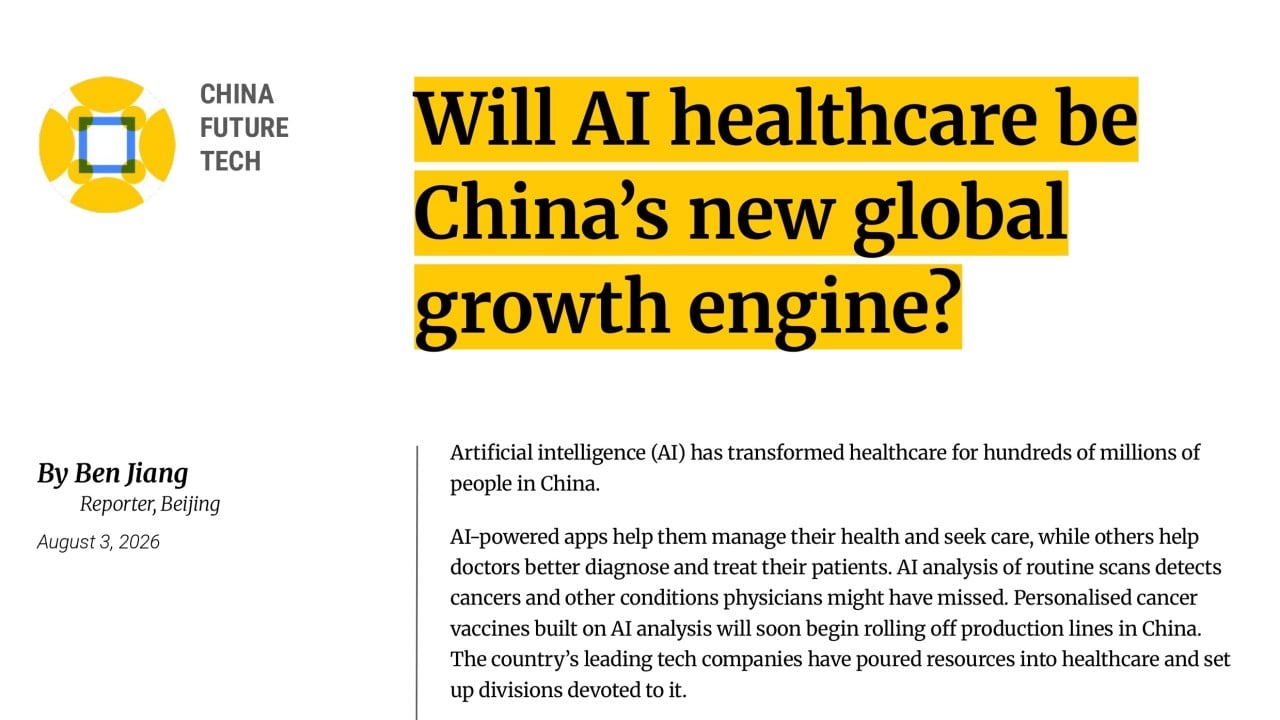
China Leverages Artificial Intelligence to Expand Healthcare Capabilities and Global Market Presence
China is increasingly integrating artificial intelligence into its healthcare sector to improve diagnostic accuracy and patient management. The country is now positioning these technological advancements as a potential driver for future economic and industrial growth.
China is undergoing a significant shift in its healthcare infrastructure by integrating artificial intelligence (AI) into clinical and consumer-facing applications. According to reports, AI-powered platforms are currently being used to assist patients in managing personal health and to support medical professionals in diagnosing complex conditions. Specifically, AI analysis is being utilized to review routine medical scans, which has reportedly led to the detection of cancers and other ailments that might otherwise go unnoticed by human observation.
Beyond diagnostic support, the country is moving toward the commercial production of personalized cancer vaccines, which are developed through AI-driven data analysis. Major Chinese technology firms are investing heavily in these sectors, signaling a strategic move to establish these healthcare innovations as a core component of the nation's economic engine. While the focus remains on domestic implementation, the scale of these initiatives suggests an ambition to influence global healthcare standards and market dynamics. The integration of these technologies reflects a broader national strategy to transition from traditional manufacturing toward high-tech, service-oriented growth sectors. As these AI-driven medical solutions move from development to production, they are expected to play a central role in China’s long-term industrial planning.
📡 Media Analysis
How each outlet framed the story — angles, word choices, and what they chose to push or ignore.
Framed AI healthcare as a promising industrial success story for China's economy.
"new global growth engine"
✓ Only outlet to report: Mentioned the upcoming rollout of AI-analyzed personalized cancer vaccines.
⚡ Where Sources Disagree
- ·None identified; only one source provided.
🔍 What Nobody's Reporting
- ·Lack of discussion regarding data privacy concerns or ethical implications of AI in Chinese healthcare.
- ·Absence of independent verification or third-party data regarding the actual efficacy of these AI tools.
- ·No mention of potential international regulatory hurdles for exporting these medical technologies.
📰 Sources
0 A-rated source(s) among 1 total. Lowest trust: SCMP (B)