
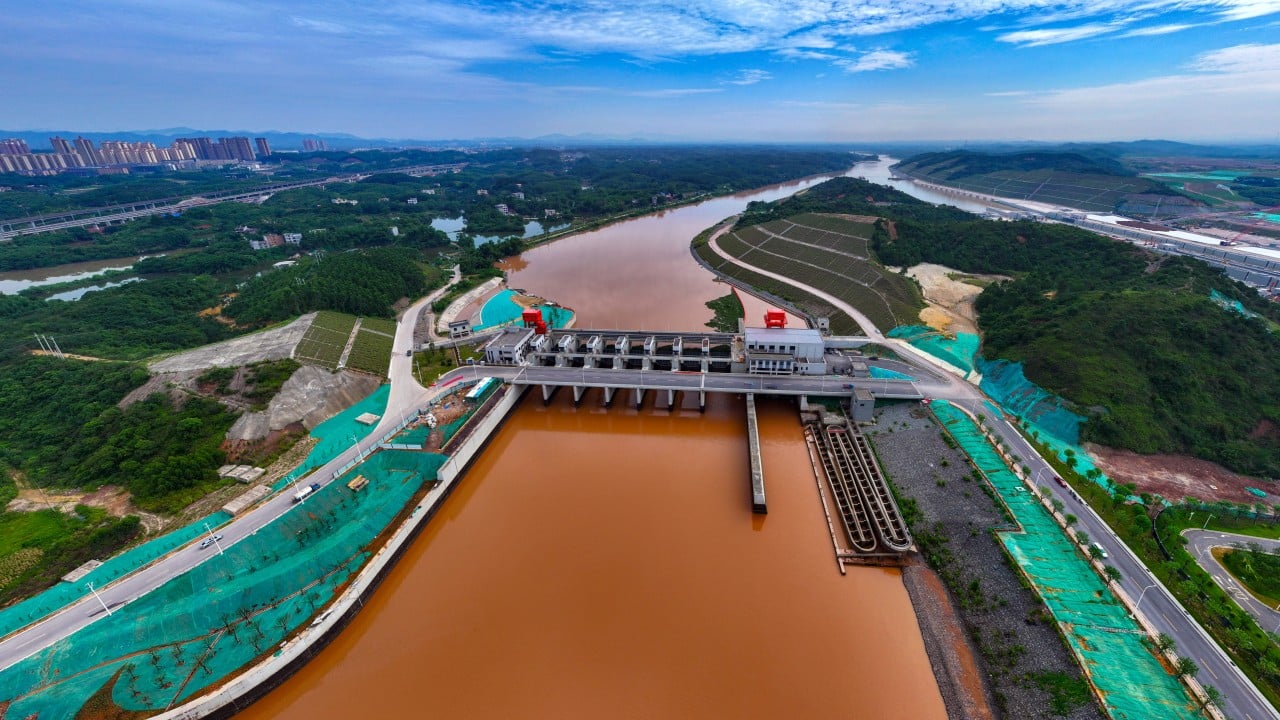
China Opens Pinglu Canal to Connect Southwestern Interior to the Sea
China has inaugurated the 134.2km Pinglu Canal, the country's first major river-to-sea waterway built since 1949. The project aims to link the landlocked Guangxi region to the Beibu Gulf to facilitate trade with Southeast Asia.
Market Narrative Detected
The narrative suggests that massive state-led infrastructure projects are the primary engine for regional economic revitalization. This benefits the Chinese government and state-owned construction firms by reinforcing confidence in long-term domestic growth despite broader economic headwinds.
The Pinglu Canal, spanning 134.2 kilometers (83.4 miles), officially opened this week, marking a significant infrastructure milestone for China. The project connects a major tributary of the Pearl River in the Guangxi Zhuang autonomous region directly to the Beibu Gulf. By providing a direct water route to the sea, the canal is intended to reduce logistics costs and improve trade connectivity between China’s southwestern interior and Southeast Asian markets.
Project operators have compared the potential economic impact of the canal to the role the Yangtze River played in the development of Shanghai. By creating a new maritime gateway, the government hopes to stimulate industrial growth in landlocked areas that have historically struggled to compete with coastal manufacturing hubs. While the project is framed as a major economic catalyst, it represents a significant engineering effort to reorient inland trade flows toward the south. The canal is expected to serve as a primary artery for goods moving between the interior provinces and international ports, effectively bypassing longer, more expensive land-based transport routes.
📡 Media Analysis
How each outlet framed the story — angles, word choices, and what they chose to push or ignore.
Focused on the potential economic transformation and the historical significance of the infrastructure project.
"transform the economy of the country’s landlocked southwestern interior"
✓ Only outlet to report: Noted that this is the first new river-to-sea canal built in China since 1949.
🔍 What Nobody's Reporting
- ·Environmental impact assessments regarding the disruption of local river ecosystems.
- ·The total cost of the project and the projected timeline for return on investment.
- ·Potential geopolitical tensions or trade disputes that could arise from shifting trade routes toward Southeast Asia.
📰 Sources
0 A-rated source(s) among 1 total. Lowest trust: SCMP (B)