
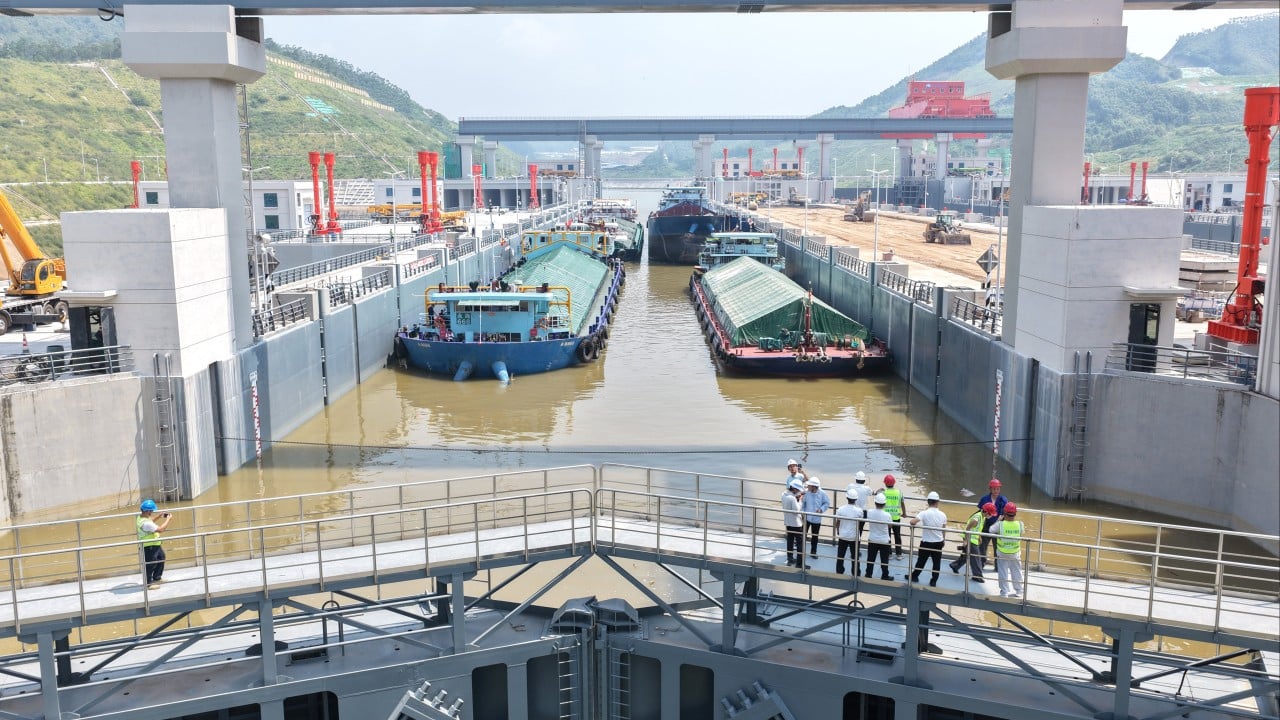
China Prepares to Open $10.8 Billion Pinglu Canal for Southeast Asian Trade
China has taken a major step toward completing the Pinglu Canal, a $10.8 billion infrastructure project designed to improve shipping efficiency with Southeast Asia. The delivery of a command vessel signals that the waterway is nearing its official opening later this month.
Market Narrative Detected
The narrative suggests that China's massive state-led infrastructure spending is a reliable engine for economic growth and regional dominance. This benefits the Chinese government and state-linked construction firms by portraying these projects as inevitable successes.
The Pinglu Canal, a massive infrastructure project costing approximately 72.7 billion yuan (US$10.8 billion), is nearing completion as China prepares to integrate it into its trade network. On Monday, the project reached a milestone with the delivery of the 'Pinglu 001,' the first command and management vessel designated to oversee operations on the waterway.
This canal is intended to serve as a strategic shortcut, connecting inland regions of China to the sea and facilitating faster, more efficient shipping routes to members of the Association of Southeast Asian Nations (ASEAN). By providing a direct water route, the project aims to reduce logistics costs and increase the volume of goods moving between China and its southern neighbors. The canal has been under construction for several years and is considered a signature piece of China's broader economic strategy to bolster regional trade connectivity. Officials expect the project to be fully operational by the end of this month.
📡 Media Analysis
How each outlet framed the story — angles, word choices, and what they chose to push or ignore.
Focused on the logistical and economic utility of the canal as a strategic trade asset.
"supercharge Asean shipments"
✓ Only outlet to report: Reported the specific delivery of the 'Pinglu 001' command vessel as a precursor to the opening.
🔍 What Nobody's Reporting
- ·The environmental impact of such a large-scale canal construction on local ecosystems.
- ·The potential geopolitical friction or concerns from neighboring countries regarding China's increased trade dominance.
- ·The long-term financial viability and return on investment for a project of this scale.
📰 Sources
0 A-rated source(s) among 1 total. Lowest trust: SCMP (B)