
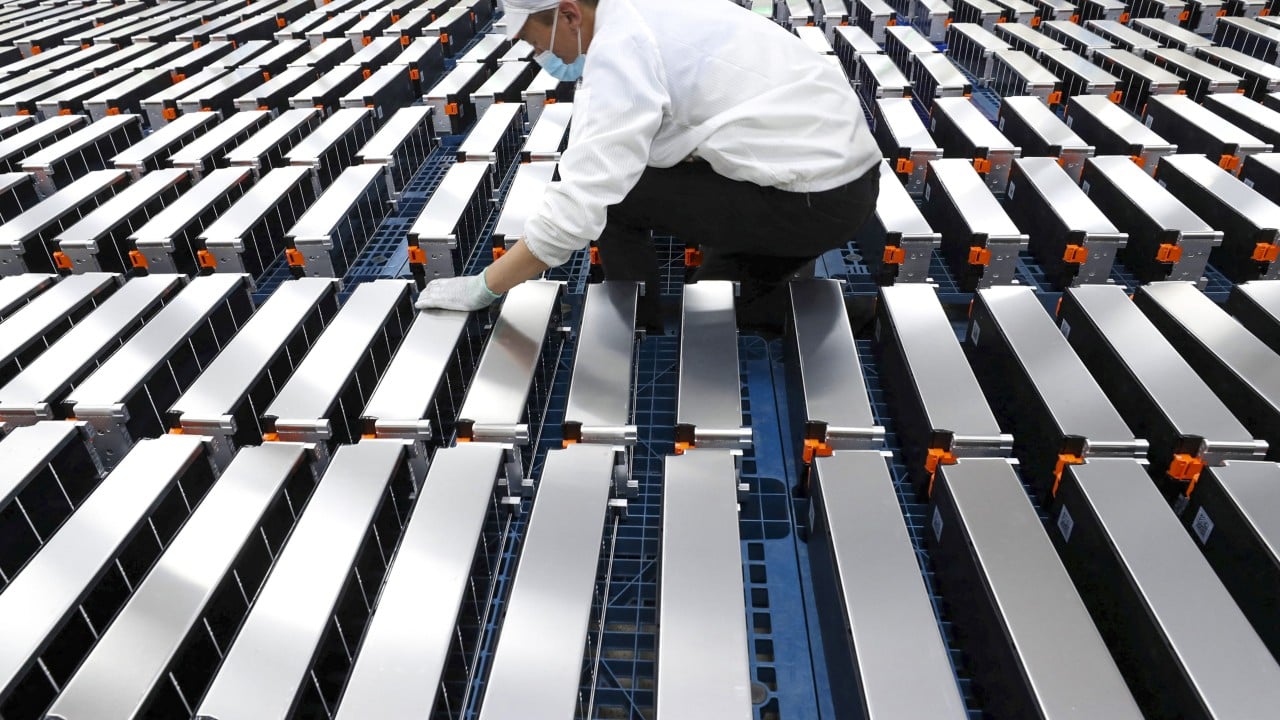
China Targets 2030 for Solid-State Battery Integration Amid Supply Chain Shifts
China is pushing to integrate solid-state battery technology by 2030 while simultaneously managing internal concerns regarding the diversification of its domestic battery supply chain. Industry regulators are currently attempting to stabilize market sentiment as automotive manufacturers move to reduce reliance on single-source suppliers like CATL.
Market Narrative Detected
The narrative suggests that China is maintaining tight control over its EV supply chain to ensure long-term dominance. This benefits state-aligned industrial giants by signaling to investors that the government will intervene to prevent market panic during periods of corporate restructuring.
China has set a strategic goal to achieve the mass adoption of solid-state battery technology by 2030, a move intended to maintain its competitive edge in the global electric vehicle (EV) market. Solid-state batteries are widely viewed as the next frontier in energy storage, offering higher energy density and improved safety profiles compared to the current liquid-electrolyte lithium-ion batteries that dominate the industry.
Simultaneously, the Chinese automotive sector is undergoing a significant shift in its supply chain structure. Many domestic carmakers are actively diversifying their battery suppliers, moving away from an exclusive reliance on CATL, the world’s largest battery manufacturer. This trend, dubbed by some market observers as "de-CATLisation," has prompted a response from Beijing. A publication affiliated with China’s Ministry of Industry and Information Technology has publicly cautioned against overreacting to these supply chain adjustments, suggesting that the market is misinterpreting standard business diversification as a decline in CATL’s influence or stability.
While the 2030 goal provides a clear technological roadmap, the current discourse highlights a tension between the government's desire for a stable, consolidated industrial base and the market's push for a more competitive, multi-vendor landscape. Analysts note that the success of this transition will depend on whether Chinese firms can overcome the high manufacturing costs and technical hurdles currently associated with solid-state battery production.
📡 Media Analysis
How each outlet framed the story — angles, word choices, and what they chose to push or ignore.
Summarized industry trends while highlighting government efforts to manage market perception regarding battery dominance.
"Beijing warns of market overreaction"
✓ Only outlet to report: Reported on the specific pushback from an industry ministry publication regarding the 'de-CATLisation' narrative.
⚡ Where Sources Disagree
- ·Whether the diversification of battery suppliers represents a structural weakness for CATL or a healthy maturation of the Chinese EV market.
🔍 What Nobody's Reporting
- ·Lack of specific technical milestones or government funding mechanisms for the 2030 solid-state goal.
- ·Absence of independent expert analysis on whether 2030 is a realistic timeline for mass-market solid-state battery production.
📰 Sources
0 A-rated source(s) among 1 total. Lowest trust: SCMP (B)