
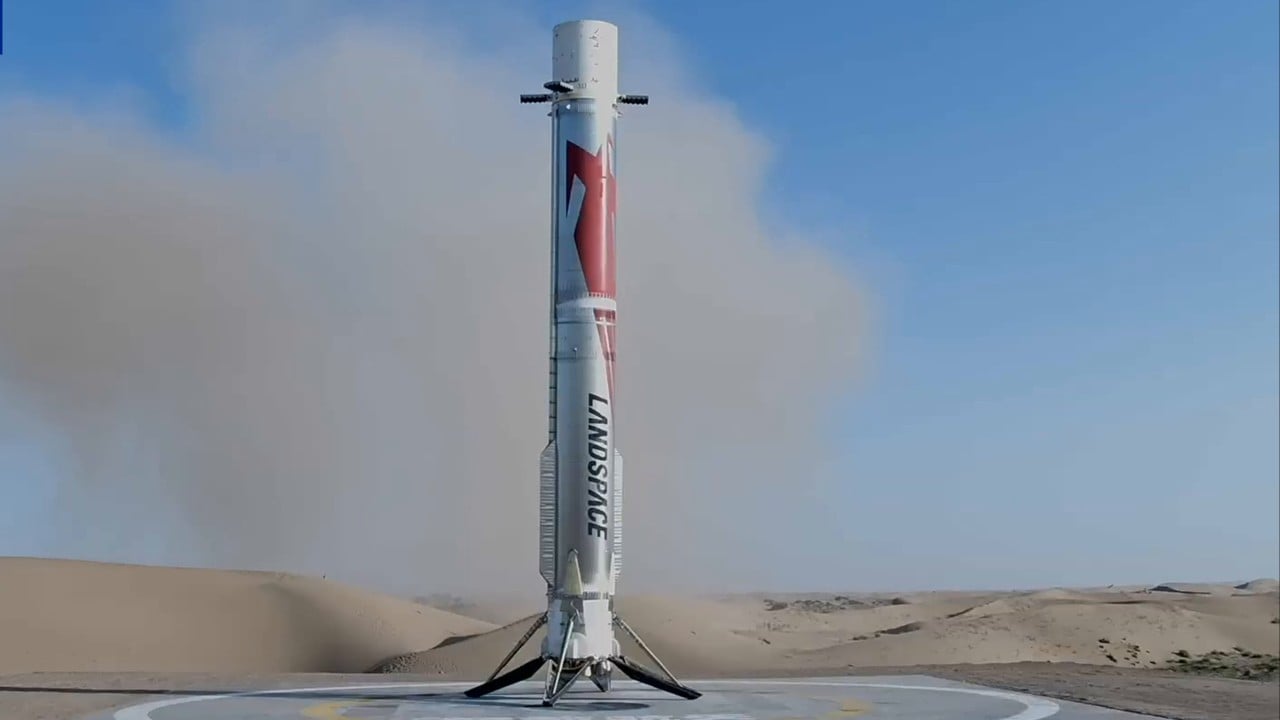
China’s LandSpace Successfully Recovers Stainless-Steel Rocket Booster After Orbital Launch
Chinese commercial space firm LandSpace has successfully recovered a stainless-steel rocket booster following an orbital mission. This achievement marks a significant milestone in the development of reusable, cost-effective launch technology.
LandSpace, a prominent commercial rocket manufacturer in China, has achieved a significant milestone by recovering a stainless-steel booster after an orbital launch. The mission involved the Zhuque-3 rocket, which successfully reached orbit before its first stage was recovered. This accomplishment positions LandSpace as the first commercial entity in China to complete both an orbital flight and a successful first-stage recovery of this nature.
The use of stainless steel in rocket construction is a design choice shared by other major players in the aerospace industry, most notably SpaceX. While SpaceX’s Super Heavy booster also utilizes stainless steel, the company is currently navigating the regulatory process, awaiting approval from the U.S. Federal Aviation Administration (FAA) to attempt a similar recovery maneuver. The success of the Zhuque-3 mission is viewed by industry analysts as a notable advancement in the global race to develop reusable rocket technology, which is intended to lower the financial barriers to space exploration and satellite deployment.
While the technical achievement is clear, the broader implications for the global space race remain a subject of ongoing discussion. LandSpace’s success highlights the rapid maturation of China’s private space sector, which is increasingly competing with established international firms. The recovery of the booster provides a proof-of-concept for the viability of stainless-steel reusability, a design philosophy that aims to balance structural durability with manufacturing efficiency. As both Chinese and American firms continue to iterate on their respective launch systems, the focus remains on achieving consistent, cost-effective reusability to support the growing demand for orbital access.
📡 Media Analysis
How each outlet framed the story — angles, word choices, and what they chose to push or ignore.
Highlighted China's technological progress by framing the event as a competitive victory over SpaceX.
"beats SpaceX"
✓ Only outlet to report: Identified the specific rocket model as the Zhuque-3.
🔍 What Nobody's Reporting
- ·Lack of technical specifications regarding the recovery method (e.g., landing pad vs. sea recovery).
- ·Absence of independent verification or commentary from non-Chinese aerospace experts.
📰 Sources
0 A-rated source(s) among 1 total. Lowest trust: SCMP (B)