
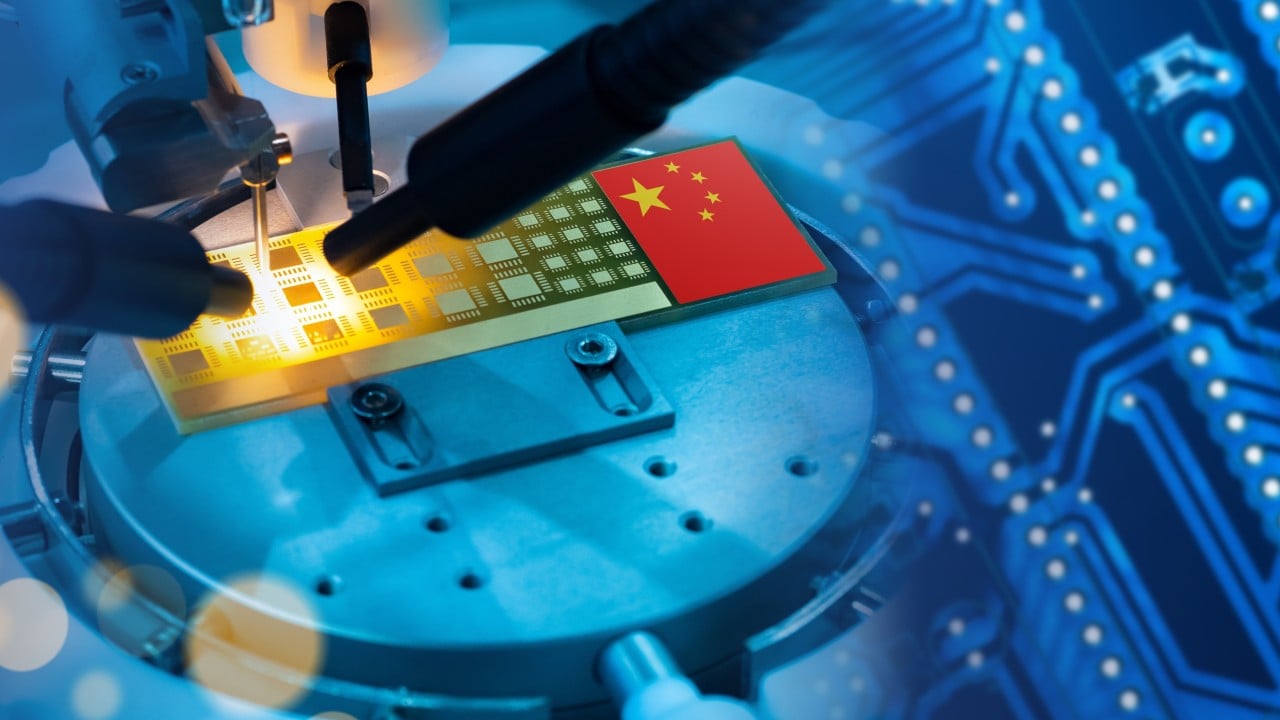
Chinese Researchers Advance 3-nm Chip Production Without EUV Lithography
Chinese researchers have reportedly achieved progress in semiconductor manufacturing at the 3-nanometer node using older lithography equipment. This development represents an effort to bypass U.S. export restrictions that prevent access to advanced extreme ultraviolet (EUV) lithography tools.
Chinese researchers have announced early technical progress in manufacturing semiconductor chips at the 3-nanometer node. This achievement is notable because it was accomplished without the use of extreme ultraviolet (EUV) lithography machines, which are currently the industry standard for producing such advanced chips. Under existing U.S. export control regulations, Chinese firms are prohibited from purchasing these state-of-the-art EUV machines from the Dutch manufacturer ASML.
The research suggests that China is attempting to develop an alternative pathway for high-end chip production to mitigate the impact of ongoing international trade sanctions. By utilizing older lithography technology—typically reserved for less complex chips—to reach the 3-nm threshold, the researchers aim to demonstrate that domestic semiconductor capabilities can continue to evolve despite the lack of access to the most modern global equipment. While this marks a significant technical milestone, the report does not clarify the commercial viability, yield rates, or mass-production scalability of this specific manufacturing method compared to traditional EUV-based processes. The development highlights a broader strategic push within China to achieve technological self-sufficiency in the face of tightening Western restrictions on high-tech hardware.
📡 Media Analysis
How each outlet framed the story — angles, word choices, and what they chose to push or ignore.
Focused on the technical workaround to U.S. sanctions as a strategic milestone for China.
"chart an alternative path"
🔍 What Nobody's Reporting
- ·Lack of expert verification regarding whether this method is commercially viable for mass production.
- ·Absence of comment from U.S. regulatory bodies or ASML regarding the feasibility of this technical claim.
📰 Sources
0 A-rated source(s) among 1 total. Lowest trust: SCMP (B)