
Chinese Researchers Develop World’s Smallest Wearable Brain Monitor
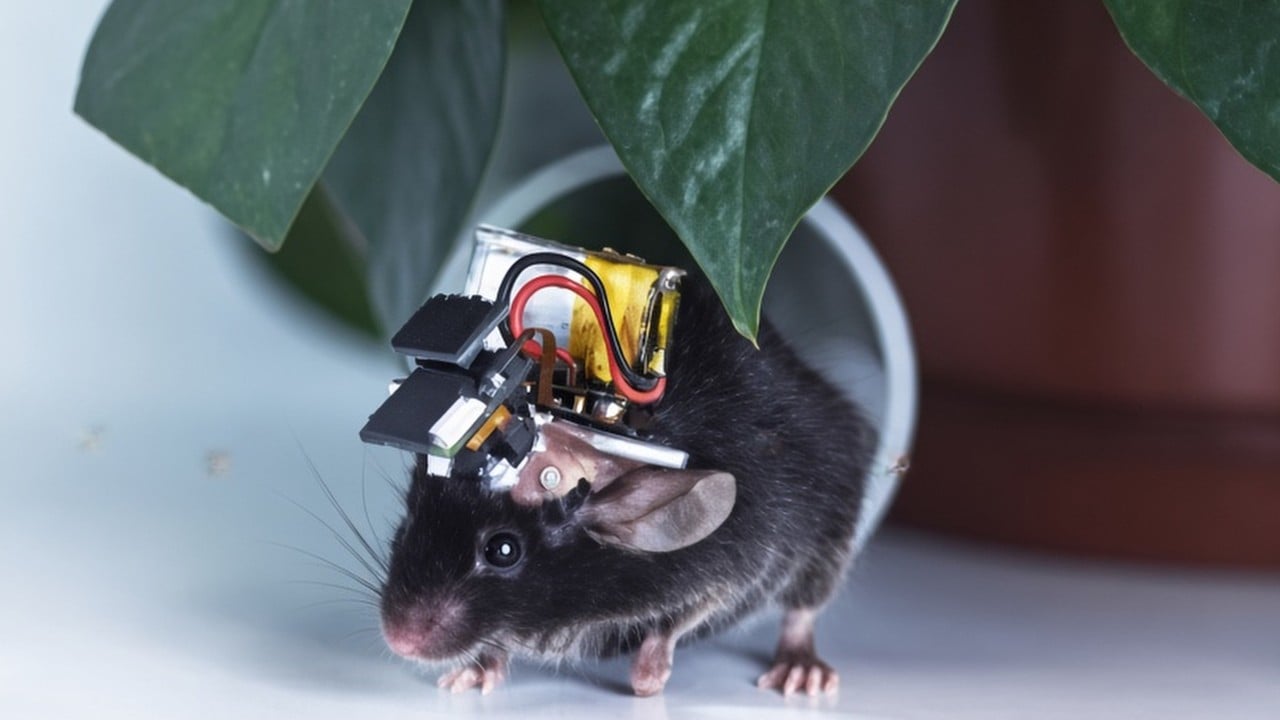
Scientists from Tsinghua University and the Chinese PLA Medical School have created a one-gram wireless device capable of monitoring thousands of neurons simultaneously. The device, named 'Airscope,' is designed to track brain activity in untethered laboratory animals.
Researchers in China have announced the development of the 'Airscope,' a wearable brain monitor that reportedly holds the title of the world’s smallest device of its kind. Weighing only one gram, the wireless monitor is designed to provide a cortex-wide view of neural activity, allowing scientists to track thousands of neurons at once.
The device is the result of a collaborative effort between Tsinghua University and the Chinese PLA Medical School. According to the research team, the primary advantage of the Airscope is its weight and wireless functionality, which allows for the observation of brain activity in laboratory animals without the constraints of tethering. By removing the physical cables typically required for such monitoring, researchers believe they can gather more accurate data on neural processes in a naturalistic setting.
While the technology represents a significant step forward in miniaturized neuro-monitoring, the report focuses primarily on its application in animal research. The development team has published their findings in a scientific paper, detailing the engineering challenges overcome to achieve such a small form factor while maintaining the ability to record high-density neural signals. The device is currently positioned as a tool for laboratory research rather than clinical human application.
📡 Media Analysis
How each outlet framed the story — angles, word choices, and what they chose to push or ignore.
Focused on the technical achievement and the institutional collaboration behind the device.
"world’s smallest wearable mini brain monitor"
✓ Only outlet to report: Identified the specific institutions involved as Tsinghua University and the Chinese PLA Medical School.
🔍 What Nobody's Reporting
- ·Lack of independent verification or peer commentary on the device's efficacy.
- ·No information provided regarding potential future applications for human patients.
- ·Absence of ethical considerations regarding the use of this technology on laboratory animals.
📰 Sources
0 A-rated source(s) among 1 total. Lowest trust: SCMP (B)