
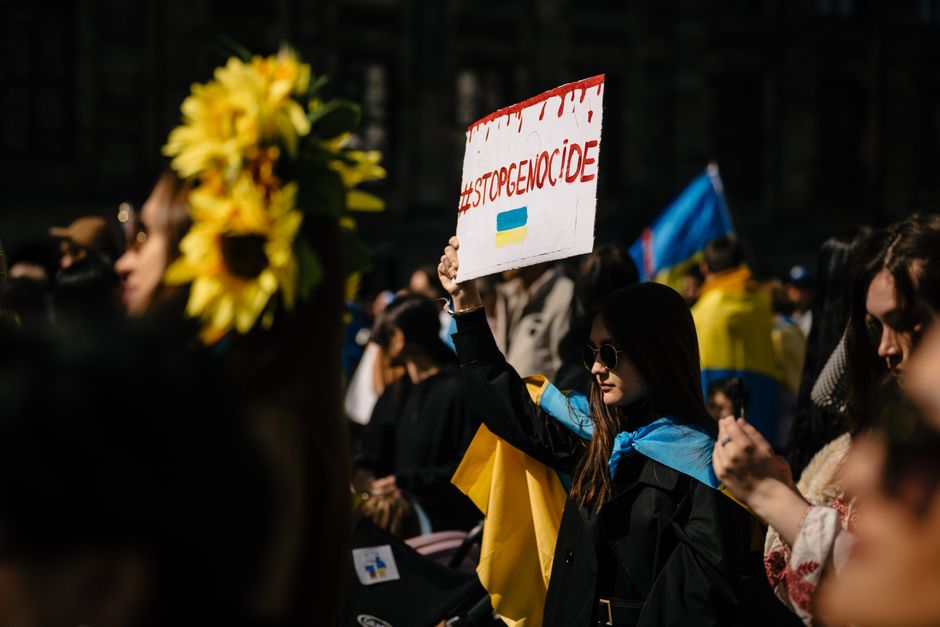
Debate Over the Definition and Application of the Term 'Genocide'
The term 'genocide' remains a subject of intense political and legal debate, with critics arguing that its usage is often driven by public opinion rather than strict legal criteria. The discussion centers on whether the label should be applied based on consensus or through formal international judicial processes.
The term 'genocide' has become a focal point in contemporary political discourse, often sparking controversy regarding how and when it should be applied to ongoing conflicts. A recent perspective published by Haaretz suggests that the classification of an event as genocide should not be determined by popular opinion or widespread public consensus. Instead, the argument posits that the term carries a specific legal and historical weight that is distinct from political rhetoric.
There is a clear divide in how different observers approach this terminology. Some argue that the term is an essential tool for human rights advocacy, intended to mobilize international intervention and protect vulnerable populations. Conversely, critics—including the perspective highlighted by Haaretz—contend that the term is frequently weaponized in the court of public opinion, potentially diluting its legal significance. These critics argue that 'genocide' is a precise legal definition under international law, specifically the 1948 Genocide Convention, which requires proof of 'intent to destroy, in whole or in part, a national, ethnical, racial or religious group.'
While international bodies like the International Court of Justice (ICJ) are tasked with adjudicating such claims, the process is often slow and politically fraught. Consequently, the gap between legal findings and public perception continues to widen. While some outlets focus on the moral imperative of using the term to describe humanitarian crises, others emphasize the danger of using it as a political label. The core of the disagreement lies in whether the term serves as a descriptive tool for current events or if it should be reserved exclusively for judicial findings, regardless of the scale of human suffering reported by observers.
📡 Media Analysis
How each outlet framed the story — angles, word choices, and what they chose to push or ignore.
Argues that the term genocide is being misused as a political label rather than a legal one.
"Genocide Doesn't Happen Because Everyone Says It Was a Genocide"
✓ Only outlet to report: Explicitly challenges the trend of using the term genocide as a consensus-based political descriptor.
⚡ Where Sources Disagree
- ·Whether 'genocide' is a social construct defined by public consensus or a rigid legal definition defined by international courts.
🔍 What Nobody's Reporting
- ·Lack of input from international legal experts regarding the current threshold for proving genocidal intent.
- ·Absence of specific case studies or ongoing conflicts to illustrate the practical application of the term.
📰 Sources
0 A-rated source(s) among 1 total. Lowest trust: Haaretz (B)