
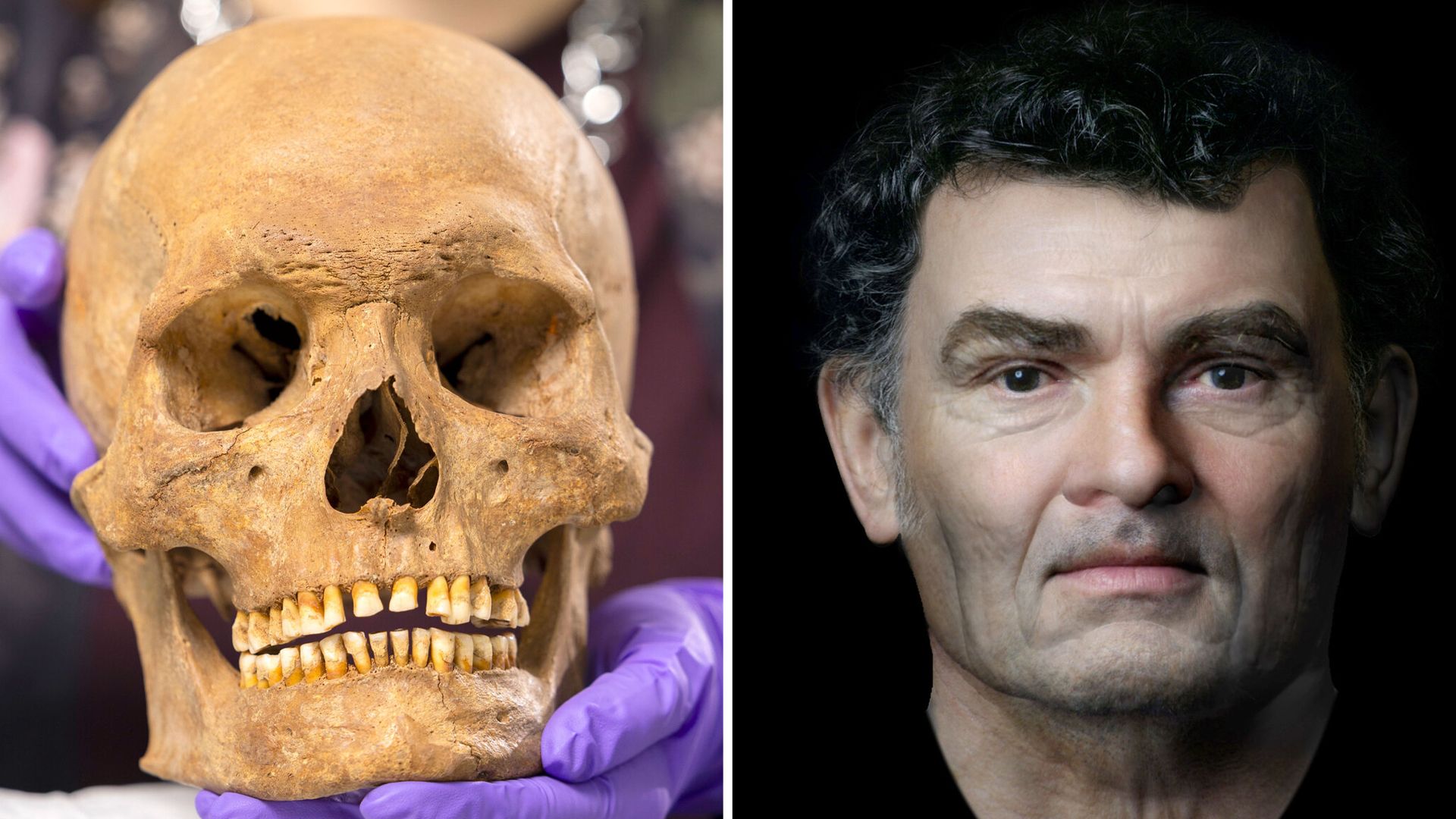
Facial Reconstruction Reveals Appearance of Man from Roman-Era Scotland
Archaeologists have reconstructed the face of a man who lived and died near the Roman frontier in Scotland approximately 2,000 years ago. The project was completed in preparation for an upcoming museum exhibition.
A new facial reconstruction project has provided a visual representation of a man who lived in Scotland during the Roman occupation, nearly two millennia ago. The reconstruction was developed using skeletal remains discovered at a site along the Roman frontier. Experts utilized forensic techniques to map the facial structure, offering a glimpse into the physical appearance of individuals living in the region during this historical period.
The project is part of a broader effort to engage the public with local history ahead of a major upcoming exhibition. While the reconstruction provides a detailed look at the man's features, researchers note that such models are based on anatomical markers and forensic science, providing an educated approximation of his appearance rather than a photographic record. The exhibition aims to contextualize the life of this individual within the broader scope of Roman influence in Northern Britain, a period characterized by the interaction between local populations and the Roman military presence. Further details regarding the man’s specific age, health, and cause of death are expected to be presented alongside the reconstruction when the exhibition opens to the public.
📡 Media Analysis
How each outlet framed the story — angles, word choices, and what they chose to push or ignore.
Focused on the archaeological discovery and the upcoming exhibition as a human-interest story.
"Revealed: Face of man"
🔍 What Nobody's Reporting
- ·Lack of specific details regarding the exact archaeological site of the discovery.
- ·No information provided on the specific museum or dates for the upcoming exhibition.
📰 Sources
0 A-rated source(s) among 1 total. Lowest trust: Sky News UK (B)