
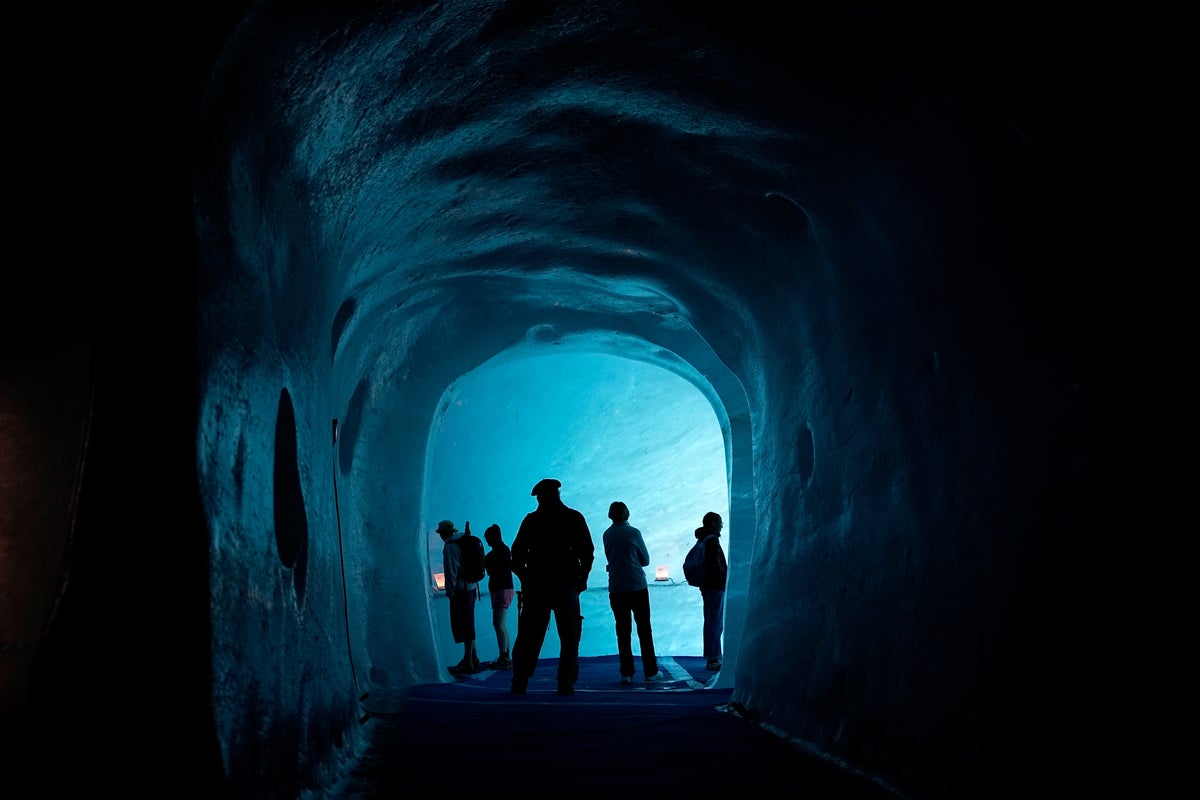
France's Mer de Glace Glacier Faces Rapid Melting Amid Rising Temperatures
France's Mer de Glace glacier is experiencing significant ice loss due to record-breaking summer heat. The environmental changes have led to increased safety risks for climbers and the implementation of protective measures to slow the melting process.
The Mer de Glace, one of France's most prominent glaciers, is currently undergoing a period of rapid retreat. According to reports, the combination of record summer temperatures and the thawing of Alpine permafrost has destabilized the surrounding terrain, leading to frequent rockfalls. These geological shifts have rendered traditional climbing routes up Mont Blanc increasingly hazardous for mountaineers and tourists.
In an effort to mitigate the loss of ice, local authorities and conservationists have deployed large protective tarps over sections of the glacier. These covers are intended to reflect sunlight and insulate the ice from the extreme heat, a strategy aimed at slowing the rate of glacial melt. While these efforts provide a temporary buffer, the broader environmental trend remains one of significant contraction for the Alpine landmark. The situation highlights the ongoing impact of climate change on high-altitude ecosystems, where rising temperatures are fundamentally altering the landscape and the safety of recreational activities in the region.
📡 Media Analysis
How each outlet framed the story — angles, word choices, and what they chose to push or ignore.
Focused on the environmental degradation and the resulting physical dangers to the public.
"increasingly dangerous"
✓ Only outlet to report: Mentioned the specific use of tarps as a mitigation strategy for the melting ice.
🔍 What Nobody's Reporting
- ·Lack of specific data or statistics regarding the exact rate of retreat compared to previous decades.
- ·No mention of the long-term economic impact on local tourism industries that rely on the glacier.
📰 Sources
0 A-rated source(s) among 1 total. Lowest trust: The Independent (B)