
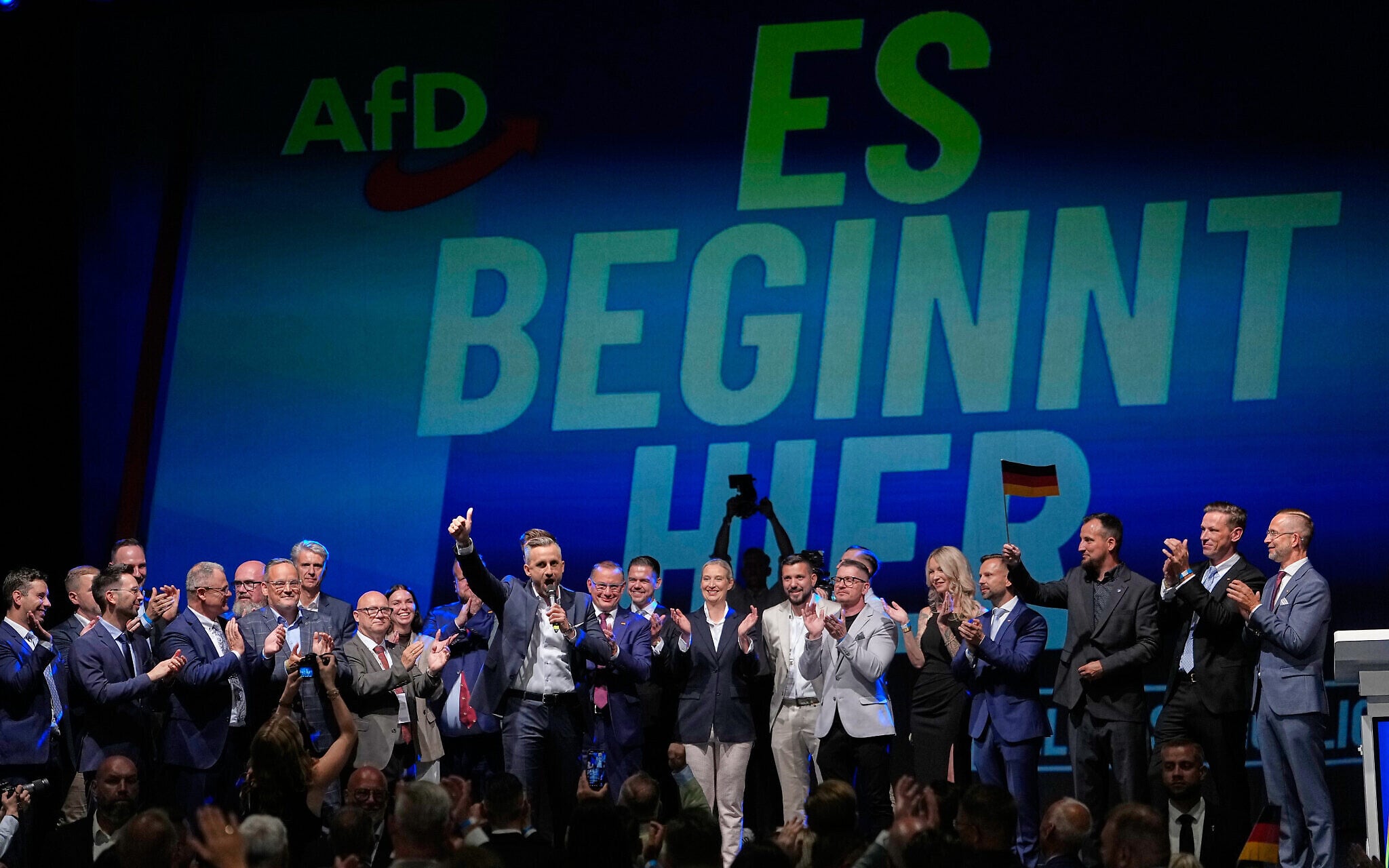
German Election Results Highlight Gains and Challenges for Far-Right Parties
Recent electoral outcomes in Germany show a notable increase in support for far-right political movements. Analysts suggest these results reflect a broader, albeit inconsistent, trend for similar parties across Europe.
Recent electoral results in Germany have provided a significant boost to far-right political factions, marking a notable shift in the country's political landscape. While these parties have secured measurable victories, political analysts emphasize that their long-term influence remains uncertain and subject to fluctuation. The success of these movements is not isolated to Germany; it is part of a wider European trend where hard-right parties, such as Reform in the United Kingdom, are experiencing varying degrees of electoral success and setbacks.
There is a consensus among observers that the durability of these gains is currently being tested. The Times of Israel notes that the movement's successes are "fickle," suggesting that while they have achieved a breakthrough, maintaining this momentum is not guaranteed. The political trajectory of these groups may become clearer following upcoming national elections in France and Spain, which are expected to serve as a litmus test for the strength of the far-right across the continent. Whether these parties will continue to expand their influence or face a period of stagnation remains a central question for European political stability. The current situation highlights a polarized electorate where traditional political structures are increasingly challenged by populist and nationalist platforms.
📡 Media Analysis
How each outlet framed the story — angles, word choices, and what they chose to push or ignore.
Framed the German results as a single data point within a larger, volatile European trend.
"movement’s successes remain fickle"
✓ Only outlet to report: Contextualized the German results by linking them to the performance of the Reform party in the UK and upcoming elections in France and Spain.
🔍 What Nobody's Reporting
- ·Lack of specific vote percentages or seat counts for the German election.
- ·Absence of context regarding which specific German parties are being categorized as 'far-right' in this report.
- ·No mention of the specific policy issues that drove voters toward these parties.
📰 Sources
0 A-rated source(s) among 1 total. Lowest trust: Times of Israel (B)