
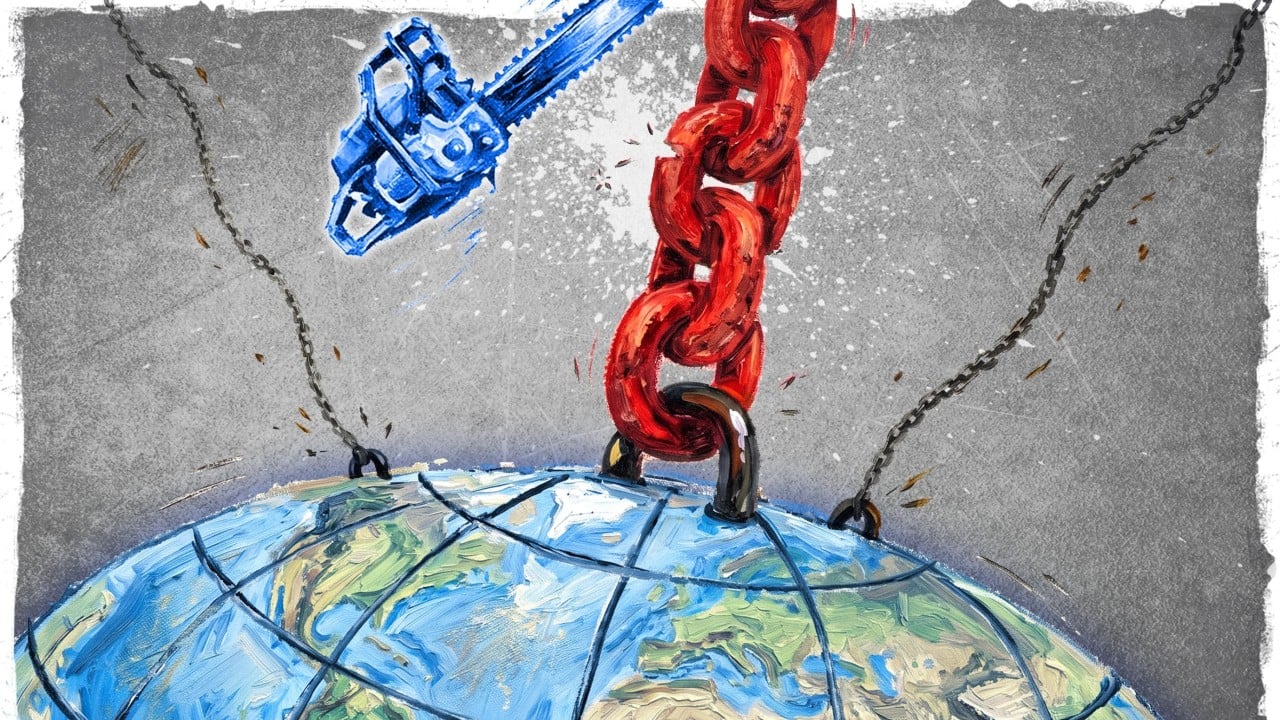
Global Manufacturing Remains Deeply Reliant on Chinese Components Despite Decoupling Efforts
While many nations are attempting to shift supply chains away from China, manufacturers in emerging economies like India continue to rely heavily on Chinese parts. This creates a paradox where industrial growth in other countries actually sustains, rather than replaces, China's manufacturing role.
Market Narrative Detected
The narrative suggests that China is indispensable to the global economy, which benefits Chinese industrial interests by discouraging foreign investors from fully committing to relocation strategies.
Despite years of political and economic rhetoric surrounding the 'decoupling' of global supply chains from China, the reality on the ground remains complex. The narrative that emerging economies like India and Vietnam are poised to replace China as the 'world’s factory' is being challenged by the practical needs of manufacturers.
For engineers and businesses in India’s growing electronics sector, the shift has not been toward total independence from Chinese goods. Instead, the nature of trade has evolved. Where companies previously imported finished consumer goods from China, they now import the specialized components and sub-assemblies required to build products domestically. This indicates that rather than a clean break, the global manufacturing ecosystem is becoming more integrated, with China shifting its focus from final assembly to the supply of essential intermediate parts.
This trend suggests that the global manufacturing machine is not easily dismantled. The infrastructure, scale, and supply chain maturity established in China over decades remain difficult for competitors to replicate in the short term. Consequently, the push for decoupling has resulted in a structural paradox: as other nations expand their industrial capacity, they often find themselves tethered to Chinese suppliers for the raw materials and components necessary to sustain that very expansion.
📡 Media Analysis
How each outlet framed the story — angles, word choices, and what they chose to push or ignore.
Used a personal anecdote to illustrate that decoupling is more of a supply chain evolution than a total separation.
"the growth of India’s electronics manufacturing industry has not eliminated the need to source components from China"
✓ Only outlet to report: Highlighted the specific shift from importing finished goods to importing intermediate components.
🔍 What Nobody's Reporting
- ·Lack of data on how much of this 'paradox' is driven by cost-efficiency versus a genuine lack of alternative suppliers.
- ·No mention of the geopolitical pressures or government subsidies that might be forcing companies to attempt decoupling despite the economic inefficiency.
📰 Sources
0 A-rated source(s) among 1 total. Lowest trust: SCMP (B)