
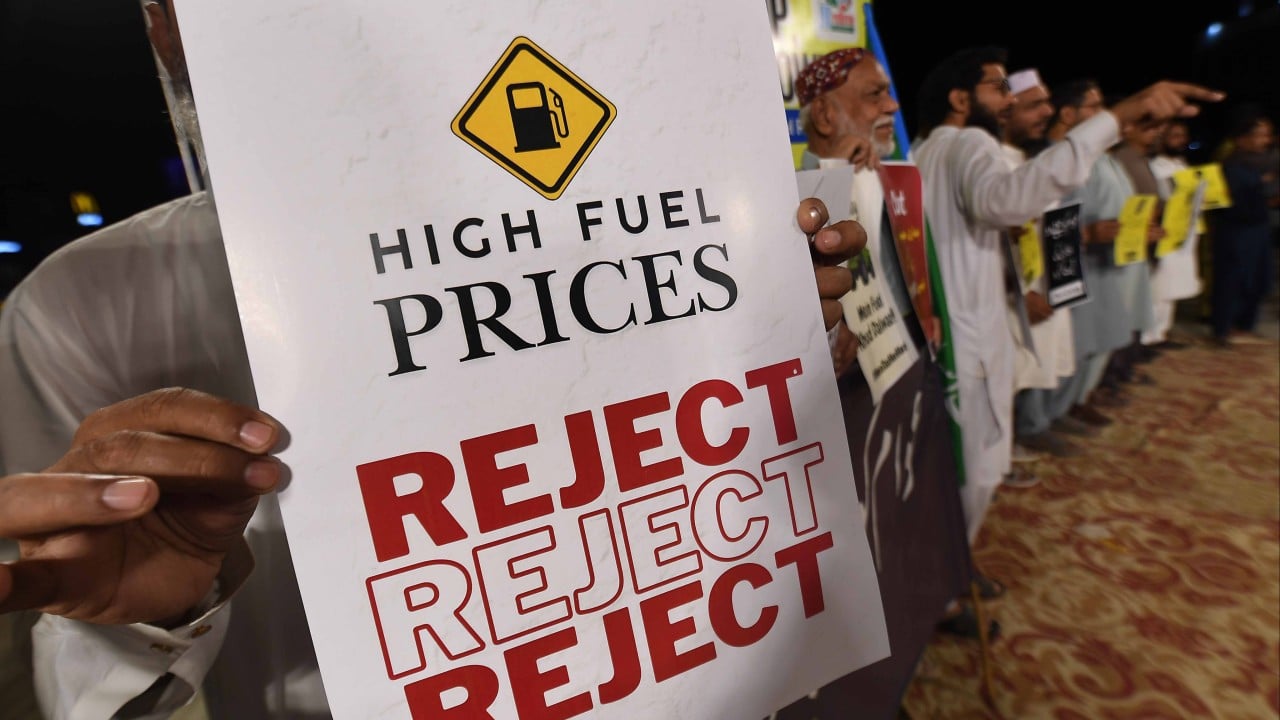
IMF and World Bank Warn Energy Costs Could Trigger Asian Debt Crises
International financial institutions are warning that energy-importing nations in Asia face significant debt risks due to a shortage of US dollars. While the global economy shows signs of growth, lower-income countries remain vulnerable to rising energy costs.
Market Narrative Detected
The narrative suggests that the global economy is bifurcating between high-tech growth and energy-dependent stagnation. This benefits institutional lenders and dollar-denominated asset holders by framing the 'dollar shortage' as a structural reality that requires IMF oversight.
At the recent International Monetary Fund (IMF) and World Bank meetings in Bangkok, officials highlighted a growing economic divide. While global growth is projected at 3.1 percent this year and 3.4 percent next year, the outlook for energy-importing and lower-income economies is increasingly precarious. The core concern is not necessarily a total lack of national funds, but specifically a shortage of US dollars required to pay for energy imports.
Analysts note that while some sectors, such as the artificial intelligence industry, are experiencing a boom that supports broader economic growth, this prosperity is not evenly distributed. Countries that rely heavily on energy imports are struggling to manage their balance of payments as dollar-denominated energy costs remain a significant burden. The IMF cautioned that these nations face a difficult path forward, as the combination of high energy prices and limited foreign currency reserves could lead to sovereign debt crises. The report emphasizes that a country does not need to be completely bankrupt to face a debt crisis; it only needs to be unable to meet its specific obligations for essential imports like energy.
📡 Media Analysis
How each outlet framed the story — angles, word choices, and what they chose to push or ignore.
Focused on the structural link between energy import costs and sovereign debt stability in Asia.
"run short of US dollars"
✓ Only outlet to report: Linked the current AI economic boom to the uneven distribution of global growth, contrasting it with the struggles of energy-importing nations.
🔍 What Nobody's Reporting
- ·Lack of specific data on which Asian countries are most at risk of default.
- ·No mention of potential policy interventions or IMF bailout conditions currently being discussed.
- ·Missing perspective from energy-exporting nations in the region that may be benefiting from these price shocks.
📰 Sources
0 A-rated source(s) among 1 total. Lowest trust: SCMP (B)