
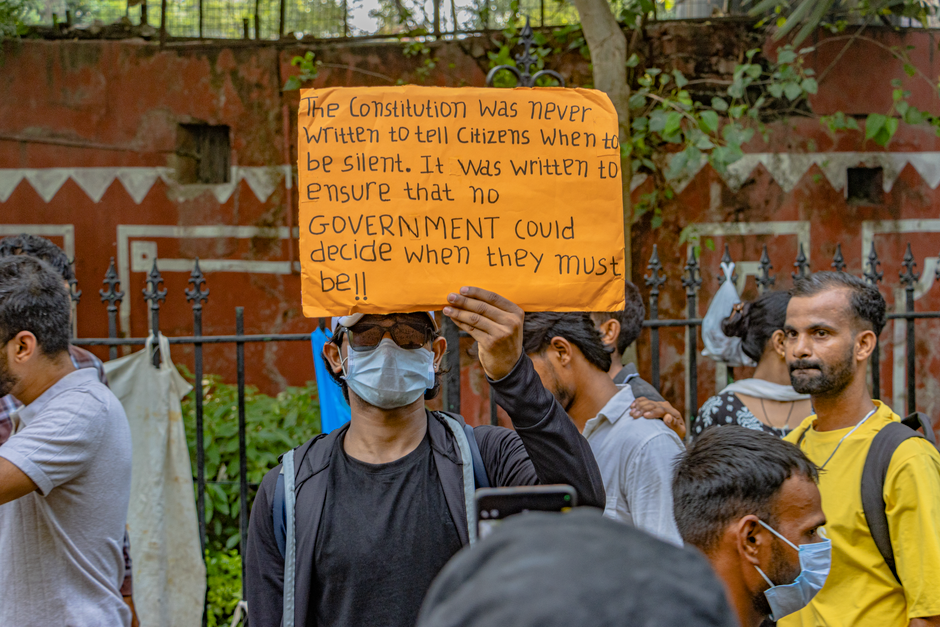
Legal and Procedural Frameworks Surrounding Police Denial of Protest Permissions
The Indian Express examines the legal tension between the constitutional right to protest and the authority of police to deny permission for public demonstrations. The report explores the procedural requirements and judicial precedents that govern how authorities manage public assembly requests.
The right to protest is a fundamental component of democratic governance, yet it frequently intersects with the state's mandate to maintain public order. When police deny permission for a protest, it triggers a complex legal process involving administrative discretion and constitutional protections. The Indian Express highlights that while citizens possess a right to assemble, this right is not absolute and is subject to 'reasonable restrictions' based on concerns like public safety, traffic management, and the prevention of disorder.
Legal experts often point to a divide in how these restrictions are applied. Some argue that police departments frequently use 'public order' as a broad justification to stifle dissent, effectively turning a notification process into a permission-based system that can be used to suppress political opposition. Conversely, law enforcement agencies maintain that they require advance notice and approval to ensure that protests do not infringe upon the rights of other citizens to move freely or access public spaces. The article notes that courts have historically intervened when police denials are found to be arbitrary or lacking in specific, evidence-based reasoning. However, the practical reality for organizers often involves lengthy litigation that can render the protest moot by the time a favorable ruling is issued. The report emphasizes that the core of the issue lies in the lack of clear, standardized guidelines for when and why a protest can be legally prohibited, leading to inconsistent application across different jurisdictions.
📡 Media Analysis
How each outlet framed the story — angles, word choices, and what they chose to push or ignore.
Focused on the legal theory and procedural hurdles of protesting rather than a specific event.
"The right to protest, and what happens when police deny permission"
✓ Only outlet to report: Detailed the specific intersection of administrative discretion and constitutional law regarding protest permits.
⚡ Where Sources Disagree
- ·Whether police permission is a necessary safety requirement or an unconstitutional barrier to free speech.
🔍 What Nobody's Reporting
- ·Lack of specific case studies or recent examples of denied protests to illustrate the theoretical points.
- ·Absence of perspectives from law enforcement officials regarding the logistical challenges of managing unpermitted protests.
📰 Sources
0 A-rated source(s) among 1 total. Lowest trust: Indian Express (B)