
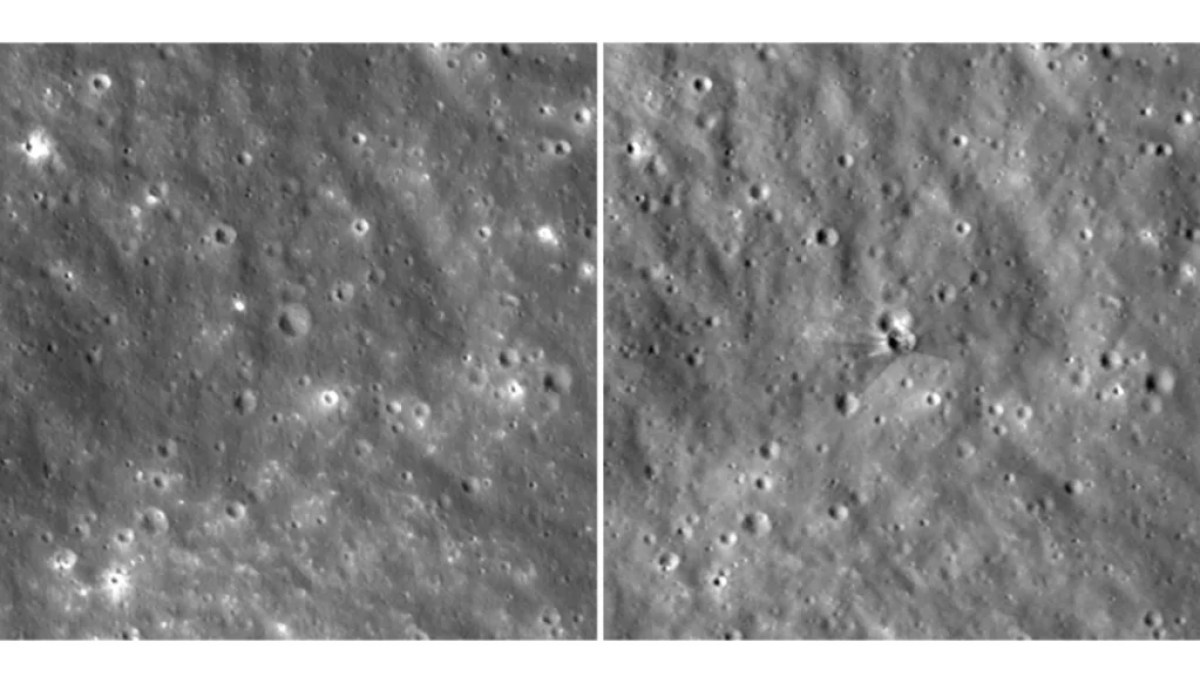
NASA releases imagery of lunar crater created by SpaceX rocket impact
NASA has published high-resolution before-and-after photographs showing the impact site of a SpaceX Falcon rocket upper stage. The rocket segment collided with the lunar surface at approximately 5,400 mph last August.
NASA’s Lunar Reconnaissance Orbiter has captured detailed imagery of a crater on the moon’s surface resulting from the impact of a SpaceX Falcon rocket upper stage. The agency released the comparative photographs on Tuesday, providing the clearest view to date of the site where the debris struck the moon at a speed of 5,400 mph (8,700 kph) on August 5.
The impact occurred as the rocket stage, which had been abandoned in space following a previous mission, completed its trajectory into the lunar surface. While both the Washington Examiner and ABC Australia report the event as a collision, the Washington Examiner provides additional context regarding the specific nature of the hardware involved, identifying it as a Falcon rocket upper stage. ABC Australia’s coverage is significantly more limited, consisting primarily of a headline and minimal descriptive text regarding the visual evidence provided by NASA. There is no disagreement between the sources regarding the timing or the nature of the event, though the Washington Examiner offers a more comprehensive account of the technical details surrounding the crash.
📡 Media Analysis
How each outlet framed the story — angles, word choices, and what they chose to push or ignore.
Provided a standard news summary with technical context regarding the rocket's origin.
"plowed into the moon"
✓ Only outlet to report: Specified that the object was a Falcon rocket upper stage and provided the exact date of the impact.
Provided a minimal headline-driven summary that lacked substantive reporting.
"slammed into Moon"
🔍 What Nobody's Reporting
- ·Lack of information regarding the long-term scientific implications of the crater for lunar research.
- ·No discussion of space debris mitigation policies or why the rocket stage was left in a trajectory to hit the moon.
📰 Sources
1 A-rated source(s) among 2 total. Lowest trust: Washington Examiner (C)