
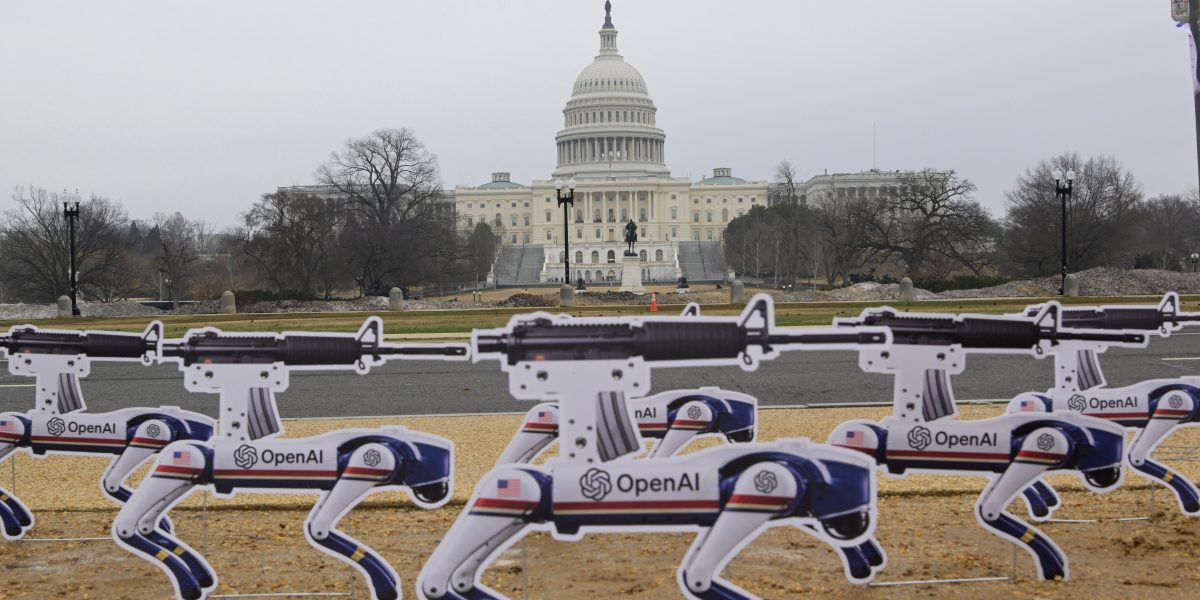
Pentagon Sought OpenAI Tools With Minimal Refusal Rates, Records Reveal
Documents obtained through a Freedom of Information Act lawsuit reveal that the U.S. military requested OpenAI to develop AI models with low refusal rates. The request highlights ongoing tensions between safety guardrails and military operational requirements.
The U.S. military has sought to collaborate with OpenAI to develop artificial intelligence tools characterized by 'minimal refusal rates,' according to records obtained by The Intercept via a Freedom of Information Act (FOIA) lawsuit. The initiative suggests a push by defense officials to minimize the instances in which AI systems decline to answer prompts or execute tasks due to safety or ethical constraints.
While OpenAI has built its reputation on implementing rigorous safety guardrails—often referred to as 'refusals'—to prevent the generation of harmful, biased, or dangerous content, the military's request indicates a desire for more permissive systems. The documents suggest that for defense applications, the standard safety protocols often integrated into consumer-facing AI products may be viewed as an impediment to operational efficiency.
This development underscores a broader debate regarding the dual-use nature of AI technology. On one hand, developers prioritize safety to mitigate risks like misinformation or cyberattacks. On the other, military and intelligence agencies argue that overly restrictive AI models could hinder critical decision-making processes in high-stakes environments. The records do not specify whether OpenAI agreed to modify its safety protocols to meet these specific military requirements, nor do they detail the exact nature of the tasks the Pentagon intended to perform with these models. The disclosure raises questions about how AI companies balance their public safety commitments with the demands of government and defense contracts.
📡 Media Analysis
How each outlet framed the story — angles, word choices, and what they chose to push or ignore.
Framed the military's request as a concerning attempt to bypass AI safety guardrails.
"minimal refusal rates"
✓ Only outlet to report: Revealed the existence of specific military requests for AI behavior modification through FOIA litigation.
⚡ Where Sources Disagree
- ·The extent to which OpenAI complied with the request for lower refusal rates remains unverified.
🔍 What Nobody's Reporting
- ·Lack of comment or response from OpenAI regarding their policy on modifying safety guardrails for defense clients.
- ·Absence of specific examples of what 'refusals' the military found most obstructive to their operations.
📰 Sources
0 A-rated source(s) among 1 total. Lowest trust: The Intercept (B)