
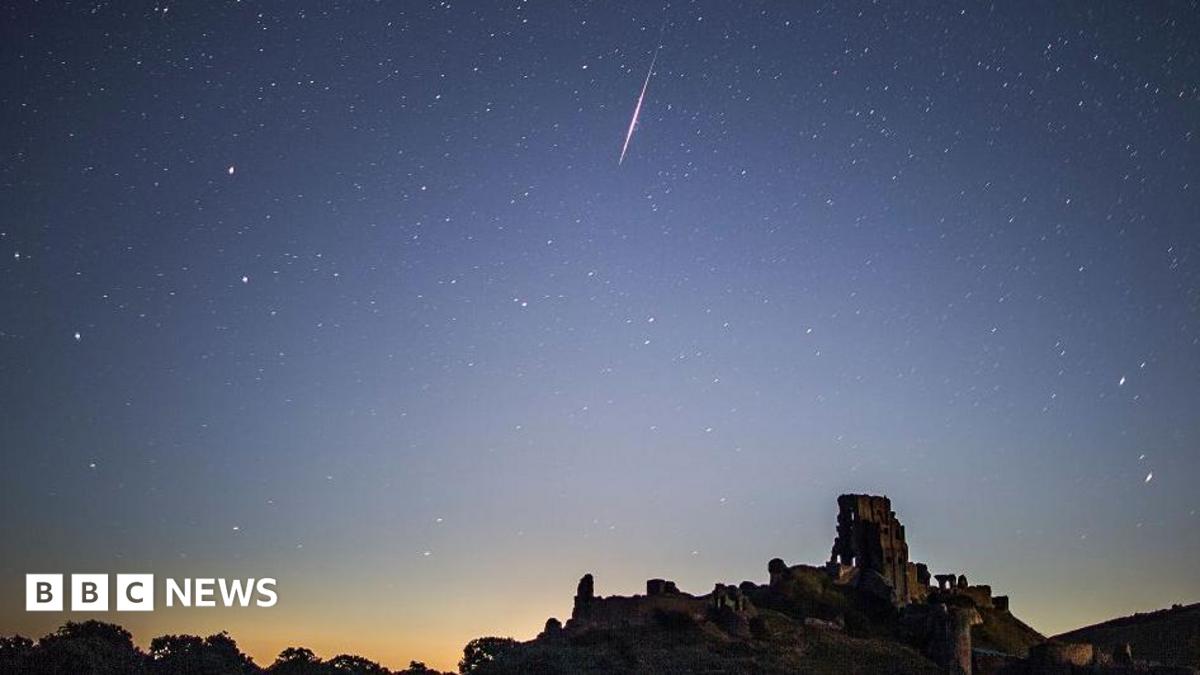
Perseid meteor shower expected to reach peak activity Wednesday night
The annual Perseid meteor shower is set to reach its maximum intensity on Wednesday evening. Astronomers identify this event as the primary opportunity for observers to view the celestial phenomenon.
The Perseid meteor shower, an annual astronomical event caused by the Earth passing through debris left by the Swift-Tuttle comet, is scheduled to reach its peak activity on Wednesday night. This event is widely anticipated by stargazers as one of the most reliable and visible meteor showers of the calendar year.
According to reports, the peak offers the highest frequency of 'shooting stars,' which are actually small particles of dust and ice burning up upon entering the Earth's atmosphere at high speeds. While the phenomenon is visible to the naked eye, experts generally recommend finding a location away from urban light pollution to maximize viewing conditions. Weather permitting, the shower is expected to be observable across various regions, though the specific visibility can fluctuate based on local cloud cover and the phase of the moon.
There are no significant disagreements between scientific sources regarding the timing of the peak, as the event is predictable based on orbital mechanics. The primary focus of current reporting remains on providing practical guidance for the public to witness the event, rather than debating the underlying physics or significance of the shower.
📡 Media Analysis
How each outlet framed the story — angles, word choices, and what they chose to push or ignore.
Provided a straightforward, service-oriented guide for the public to view the event.
"best chance of seeing a 'shooting star'"
🔍 What Nobody's Reporting
- ·Lack of specific geographic regions where visibility is optimal.
- ·No mention of the expected number of meteors per hour during the peak.
📰 Sources
1 A-rated source(s) among 1 total. Lowest trust: BBC News (A)