
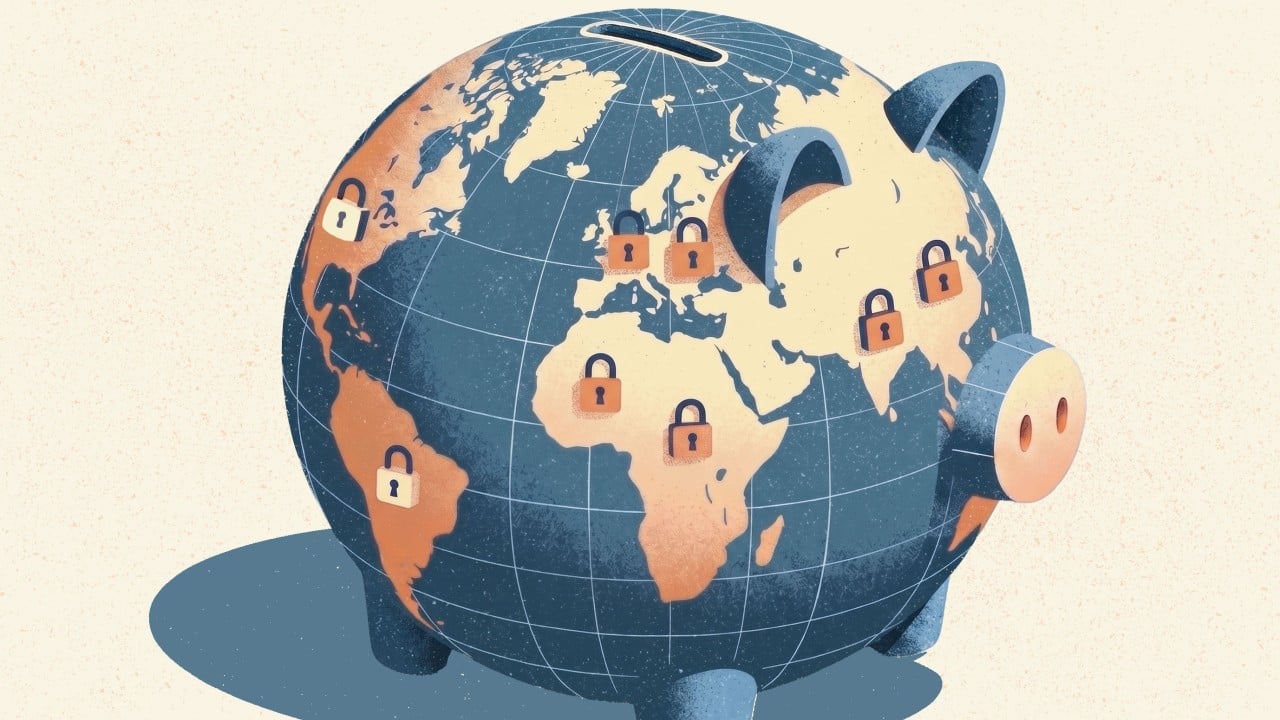
Proposing a 'Helsinki-style' framework to manage global economic security competition
The South China Morning Post suggests that the global economy requires a new system of confidence-building measures to manage rising security-driven competition. Drawing on Cold War history, the proposal argues that transparency and verification can reduce uncertainty between adversaries without requiring mutual trust.
Market Narrative Detected
The narrative suggests that the global economy is entering a period of permanent, high-stakes geopolitical friction. This benefits institutional actors who thrive on 'stability' and 'predictability' by encouraging governments to create formal rules that protect existing market structures from sudden shocks.
The current global economic landscape is increasingly defined by security concerns, leading to a shift away from traditional free-market integration toward protectionism and strategic competition. The South China Morning Post argues that this environment mirrors the tensions of the Cold War, where military rivalry created significant instability. To address this, the outlet proposes a modern equivalent to the 1975 Helsinki Final Act and the subsequent Stockholm Document.
The core of this proposal is not to demand that nations abandon deterrence or suddenly trust their rivals. Instead, it suggests that economic and military competitors can adopt practical, modest measures to reduce the risk of accidental escalation. These measures include prior notification of major policy shifts, information exchanges, and verification protocols. By focusing on predictability rather than ideological alignment, the author suggests that global powers can prevent the 'security-obsessed' economy from spiraling into a more dangerous, unmanaged conflict. The article emphasizes that the goal is to make competition safer by reducing the 'uncertainty' that often leads to reactive, escalatory policies between major economic powers.
📡 Media Analysis
How each outlet framed the story — angles, word choices, and what they chose to push or ignore.
Uses historical Cold War analogies to advocate for diplomatic guardrails in modern economic policy.
"adversaries do not need trust to reduce uncertainty"
✓ Only outlet to report: Proposes a specific historical framework (the Stockholm Document) as a blueprint for modern economic security.
🔍 What Nobody's Reporting
- ·The article does not address whether major economic powers currently have the political will to engage in such transparency measures.
- ·It fails to account for how private corporations, which drive much of the global economy, would react to government-mandated 'verification' protocols.
📰 Sources
0 A-rated source(s) among 1 total. Lowest trust: SCMP (B)