
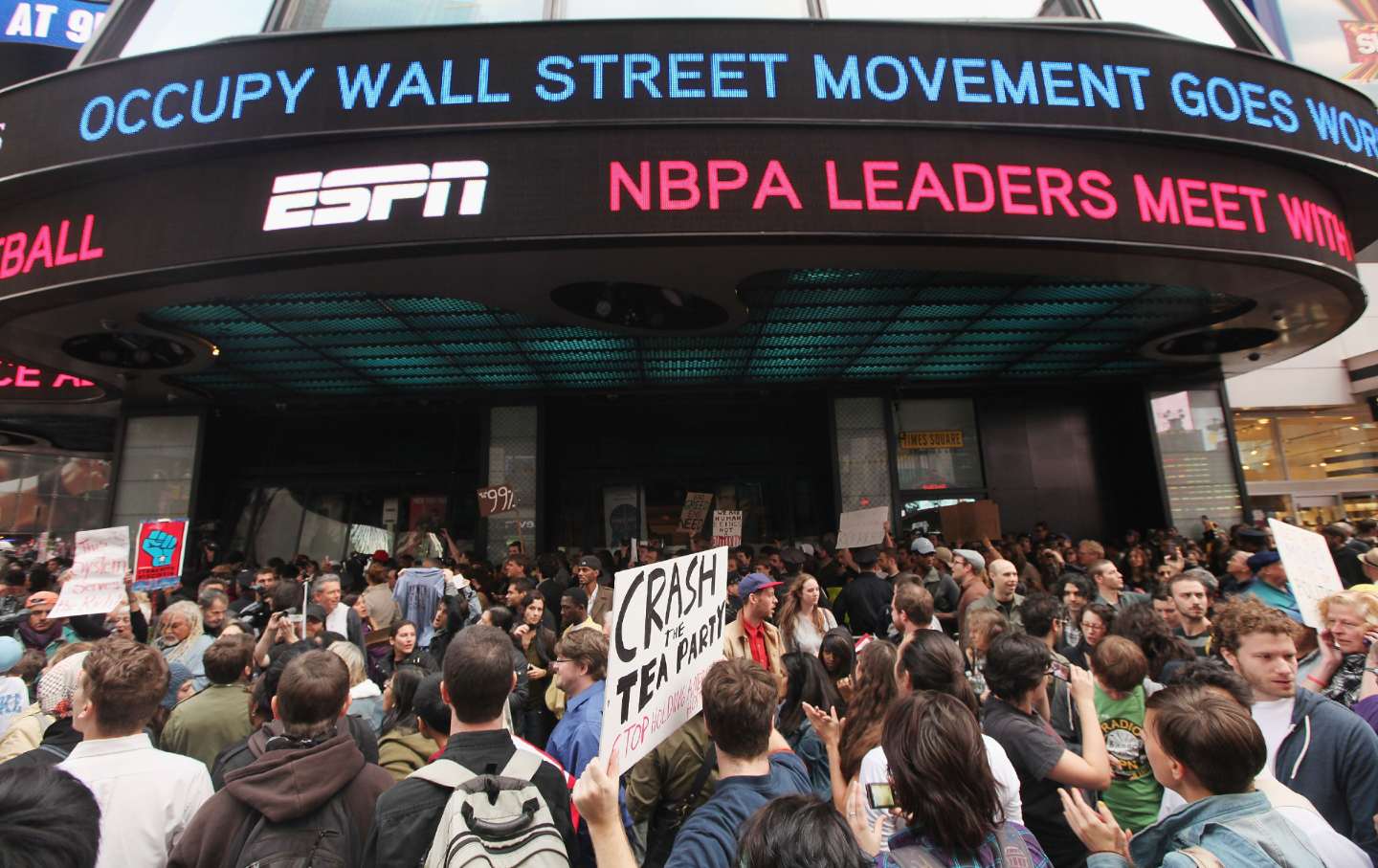
Reflecting on the Legacy and Political Impact of Occupy Wall Street
Occupy Wall Street, which began in 2011, is often cited as a foundational moment for modern social movements. Analysts continue to debate whether its focus on grassroots organization successfully challenged systemic power or if its lack of centralized structure limited its long-term political effectiveness.
Market Narrative Detected
The narrative suggests that grassroots movements are powerful for cultural shifts but ineffective for legislative change, which benefits established political institutions by discouraging radical, non-hierarchical organizing.
More than a decade after the Occupy Wall Street movement emerged in Zuccotti Park, its influence on contemporary political discourse remains a subject of intense discussion. The movement, which centered on the slogan 'We are the 99%,' brought widespread public attention to issues of wealth inequality and the influence of corporate interests in government.
Proponents of the movement argue that Occupy successfully shifted the 'Overton window,' making topics like income disparity and the role of financial institutions central to mainstream political debate. By bypassing traditional political channels, the movement demonstrated the potential for decentralized, grassroots activism to mobilize large numbers of people quickly.
Conversely, critics and some former participants suggest that the movement’s rejection of hierarchical leadership and formal policy demands ultimately hindered its ability to achieve concrete legislative change. While the movement succeeded in building a shared identity among activists, some observers argue that its 'politics of powerlessness'—a refusal to engage with established power structures—served as a cautionary tale for future organizers. The Nation notes that while Occupy sowed the seeds for subsequent social movements, the lack of a clear strategy for converting protest into policy remains a significant point of contention regarding its overall success.
📡 Media Analysis
How each outlet framed the story — angles, word choices, and what they chose to push or ignore.
Focused on the movement as a historical lesson in the limitations of decentralized activism.
"politics of powerlessness"
⚡ Where Sources Disagree
- ·Whether the movement's refusal to engage with formal power structures was a principled stance or a strategic error.
🔍 What Nobody's Reporting
- ·Lack of quantitative data on how many specific policy changes can be directly traced to Occupy versus other economic factors.
- ·Neglect of the perspective of the financial institutions targeted by the movement.
📰 Sources
0 A-rated source(s) among 1 total. Lowest trust: The Nation (B)