
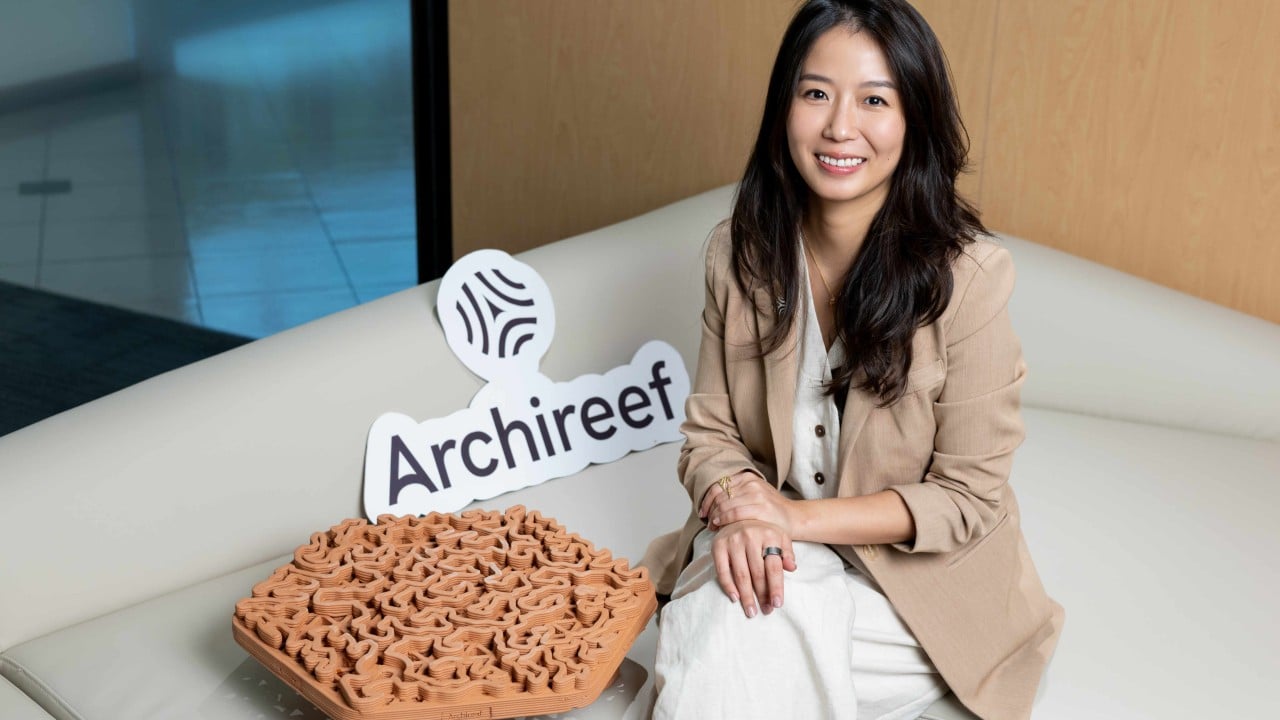
Research team develops 3D-printed tiles to improve Hong Kong coral reef restoration
Following the collapse of a 2014 coral restoration project in Sai Kung, researchers developed 3D-printed clay tiles to provide a more stable foundation for coral growth. The initiative, recognized by the Spirit of Hong Kong Awards, addresses the structural instability issues found in previous cement-based reef restoration methods.
In 2014, a University of Hong Kong research team faced a significant setback when a two-year coral restoration project in Sai Kung failed. The Agriculture, Fisheries and Conservation Department had commissioned the team to accelerate reef recovery, leading them to deploy cement structures on the seabed. While initial coral growth was successful, the colonies eventually became unstable as they increased in size.
Vriko Yu Pik-fan, who was a doctoral student during the project, noted that the cement structures lacked the necessary structural integrity to support mature coral colonies, stating, “The bigger they got, the less stable they were.” This realization prompted the team to seek alternative methods for reef restoration that could better mimic natural environments and provide a secure anchor for coral.
The team subsequently developed 3D-printed clay tiles designed to offer a more durable and stable substrate for coral to attach to. These tiles are intended to solve the “rooting” problem that caused the earlier cement structures to fail. The project’s innovative approach to marine conservation has been highlighted by the Spirit of Hong Kong Awards, which recognizes individuals and groups contributing to the city's development and environmental health. The shift from heavy cement to specialized 3D-printed materials represents a broader trend in marine biology toward using technology to create more resilient artificial reefs that can withstand environmental pressures.
📡 Media Analysis
How each outlet framed the story — angles, word choices, and what they chose to push or ignore.
Focused on the technical failure of a past project to highlight the innovation of the current solution.
"The bigger they got, the less stable they were."
✓ Only outlet to report: The specific detail that the Agriculture, Fisheries and Conservation Department commissioned the original failed project.
🔍 What Nobody's Reporting
- ·Lack of information regarding the current scale or success rate of the 3D-printed tiles compared to the original cement method.
- ·No mention of the cost difference between traditional cement structures and the 3D-printed clay tiles.
📰 Sources
0 A-rated source(s) among 1 total. Lowest trust: SCMP (B)