
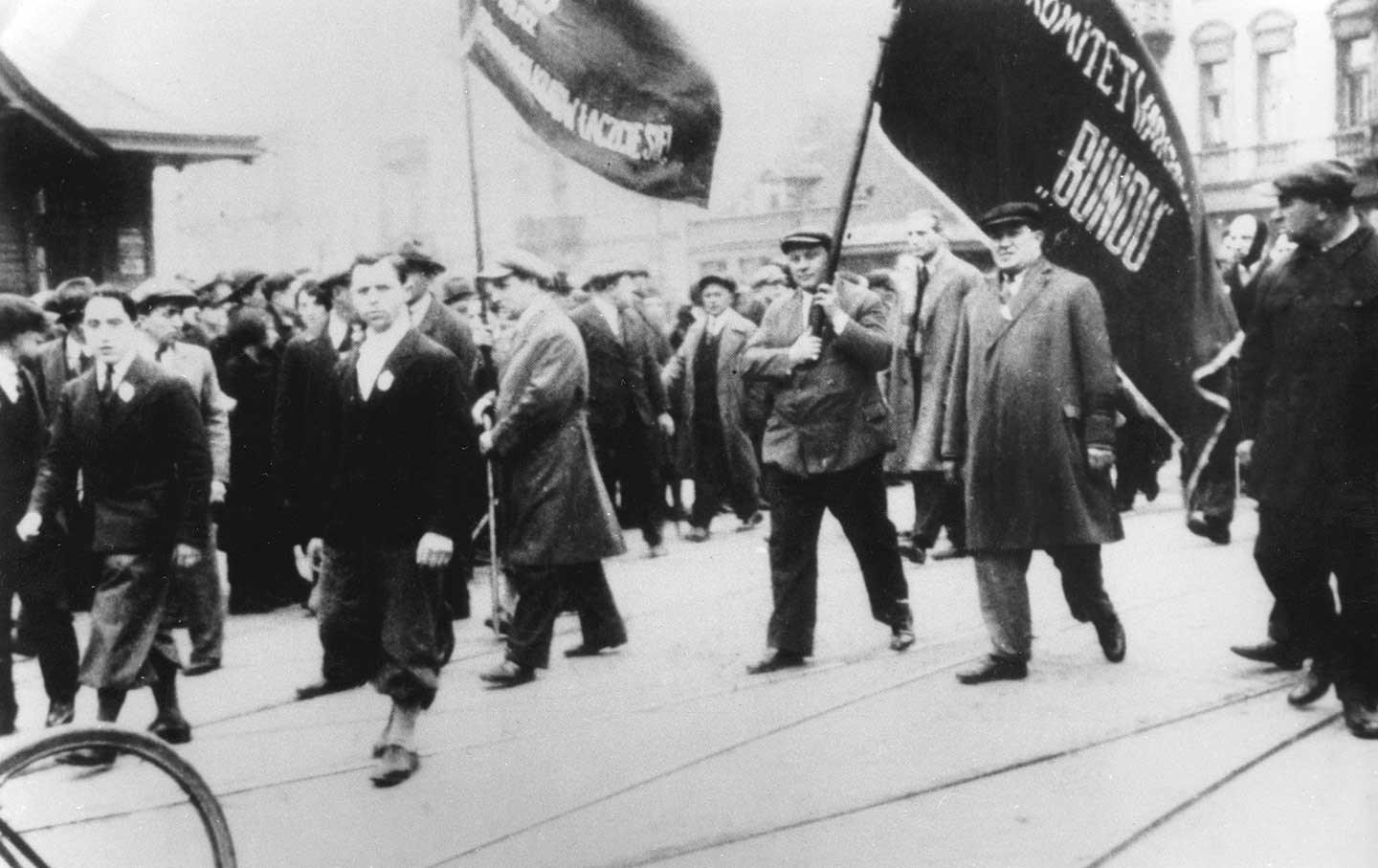
Revisiting the History and Legacy of the Jewish Labor Bund
A recent review of Molly Crabapple’s work examines the historical role of the Jewish Labor Bund. The piece explores the group's past influence and its relevance to contemporary discussions on Jewish political identity.
The Jewish Labor Bund, a historical socialist movement that originated in the Russian Empire, is the subject of renewed interest following the release of Molly Crabapple’s book, 'Here Where We Live Is Our Country.' The Bund was historically known for its focus on 'doikayt'—or 'hereness'—which emphasized building Jewish life and political autonomy within the countries where Jewish people resided, rather than pursuing a separate state.
In her analysis, Crabapple revisits the Bund’s ideological framework, which was characterized by its secularism, commitment to Yiddish culture, and opposition to Zionism. The movement sought to address the challenges of antisemitism and economic inequality through socialist organizing and cultural preservation. By examining these historical roots, the work prompts a discussion on how these past philosophies might inform modern perspectives on Jewish identity and political activism.
While the historical record of the Bund is well-documented, contemporary interpretations of its legacy vary. Some scholars view the Bund as a vital alternative to the dominant political movements of the 20th century, while others argue that its historical context makes it difficult to apply directly to current geopolitical conflicts. The discussion surrounding the Bund often intersects with broader debates regarding the history of Jewish political thought and the evolution of anti-Zionist sentiment within Jewish communities. As these historical narratives are revisited, they continue to serve as a touchstone for those exploring the intersection of ethnic identity, labor rights, and international political movements.
📡 Media Analysis
How each outlet framed the story — angles, word choices, and what they chose to push or ignore.
Frames the Bund as a relevant historical model for modern political activism.
"radical history"
✓ Only outlet to report: Connects historical Bundist ideology specifically to contemporary anti-Zionist discourse.
⚡ Where Sources Disagree
- ·The extent to which 20th-century Bundist ideology can be effectively applied to 21st-century geopolitical issues.
🔍 What Nobody's Reporting
- ·Lack of perspective from mainstream or Zionist historical organizations regarding the Bund's legacy.
- ·Absence of critical analysis regarding the failure of the Bund to prevent the Holocaust or maintain its political influence in post-war Europe.
📰 Sources
0 A-rated source(s) among 1 total. Lowest trust: The Nation (B)