
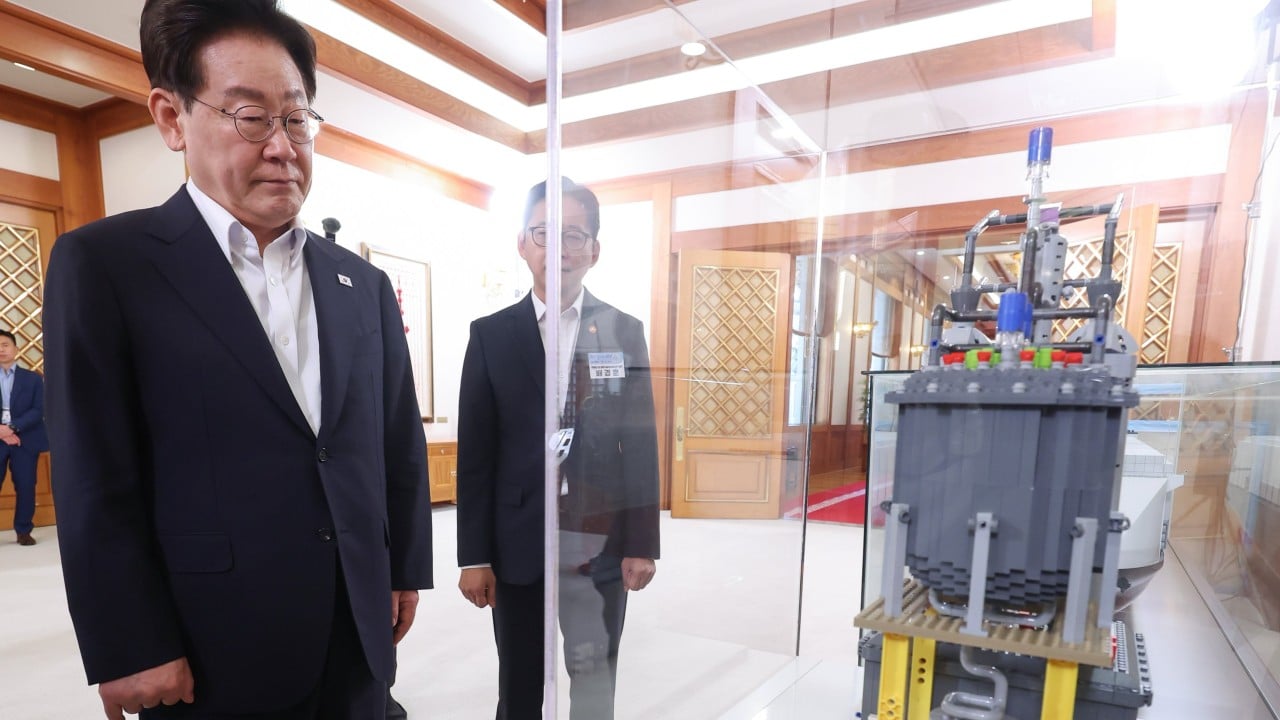
South Korea Unveils Long-Term Strategy for Quantum and Space Technology Investment
South Korea has announced a new multi-decade economic strategy focusing on seven emerging industries, including quantum computing and lunar exploration. The initiative aims to diversify the nation's economy and maintain global competitiveness amid demographic challenges.
The South Korean government has officially launched a strategic roadmap designed to foster growth in seven next-generation industrial sectors. This policy shift is a direct response to concerns regarding the country’s long-term economic potential, which is currently threatened by an aging population and an over-reliance on traditional semiconductor exports. By investing in high-stakes fields such as quantum chips, fusion power, and lunar landing technology, Seoul intends to secure a competitive position in the global market.
Officials have framed this initiative as a necessary "moonshot" effort to ensure the nation remains relevant in a post-AI global economy. The strategy is explicitly designed to prevent South Korea from falling behind the technological dominance of major superpowers like the United States and China. While the government has not provided a granular breakdown of the immediate budget allocation for each of the seven sectors, the announcement signals a shift toward long-term industrial planning intended to stabilize the economy against future demographic and trade-related headwinds. The government views these investments as essential to diversifying its industrial base and mitigating the risks associated with its current export-heavy model.
📡 Media Analysis
How each outlet framed the story — angles, word choices, and what they chose to push or ignore.
Framed the move as a defensive economic necessity to keep pace with global superpowers.
"moonshots"
✓ Only outlet to report: Identified the specific motivation as a response to an aging population and semiconductor export reliance.
🔍 What Nobody's Reporting
- ·Lack of specific financial figures or budget commitments for the proposed projects.
- ·No mention of potential private sector partnerships or how much of this is government-funded versus corporate-led.
📰 Sources
0 A-rated source(s) among 1 total. Lowest trust: SCMP (B)