
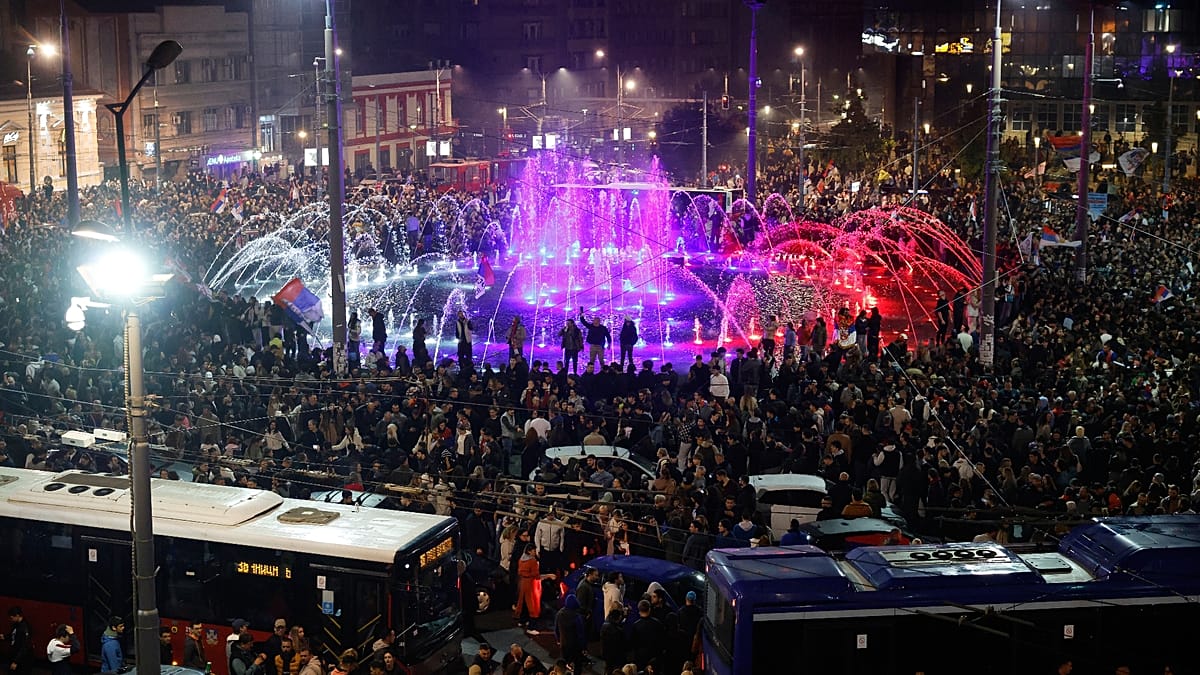
Student-led coalition wins Serbian election, signaling potential shift in EU relations
A student-led political coalition has won the Serbian election, ending the 14-year tenure of President Aleksandar Vučić. While the result has sparked optimism regarding Serbia's integration with the European Union, international observers remain cautious about the new government's future policies.
The recent election in Serbia has resulted in a significant political transition, with the 'Student List' coalition securing a victory that concludes the 14-year rule of President Aleksandar Vučić. This shift in power has generated widespread discussion regarding the country's future trajectory, particularly concerning its relationship with the European Union.
For many supporters, the election outcome represents a democratic breakthrough and a potential 'reset' in Serbia’s alignment with Western institutions. Proponents of the new coalition suggest that the change in leadership could lead to more transparent governance and a renewed commitment to EU membership criteria. However, the path forward remains complex. While the victory is viewed as a positive development by some, officials in Brussels have expressed a measured, cautious outlook. The primary concerns center on the incoming administration’s lack of clarity regarding two major geopolitical issues: the imposition of sanctions against Russia and the ongoing diplomatic status of Kosovo.
While the election results are clear, the policy implications are currently a subject of debate. Some analysts argue that the student-led movement will prioritize domestic reform and European integration, effectively distancing the nation from its previous foreign policy stances. Conversely, other observers note that the coalition has yet to provide concrete details on how it intends to navigate the delicate balance between maintaining historical ties with Moscow and meeting the requirements set by the European Union. As the new government prepares to take office, the international community is closely monitoring whether the coalition will pivot toward a more pro-Western stance or maintain a degree of neutrality on key international conflicts.
📡 Media Analysis
How each outlet framed the story — angles, word choices, and what they chose to push or ignore.
Framed the election as a potential turning point for EU relations while highlighting the uncertainty of the new government's foreign policy.
"leaves Brussels cautious"
✓ Only outlet to report: Identified the specific duration of the previous administration as 14 years.
🔍 What Nobody's Reporting
- ·Lack of detail regarding the specific platform or policy proposals of the 'Student List' coalition.
- ·Absence of reaction or commentary from the outgoing administration or its supporters.
- ·No information on the voter turnout or the specific margin of victory.
📰 Sources
0 A-rated source(s) among 1 total. Lowest trust: Euronews (B)