
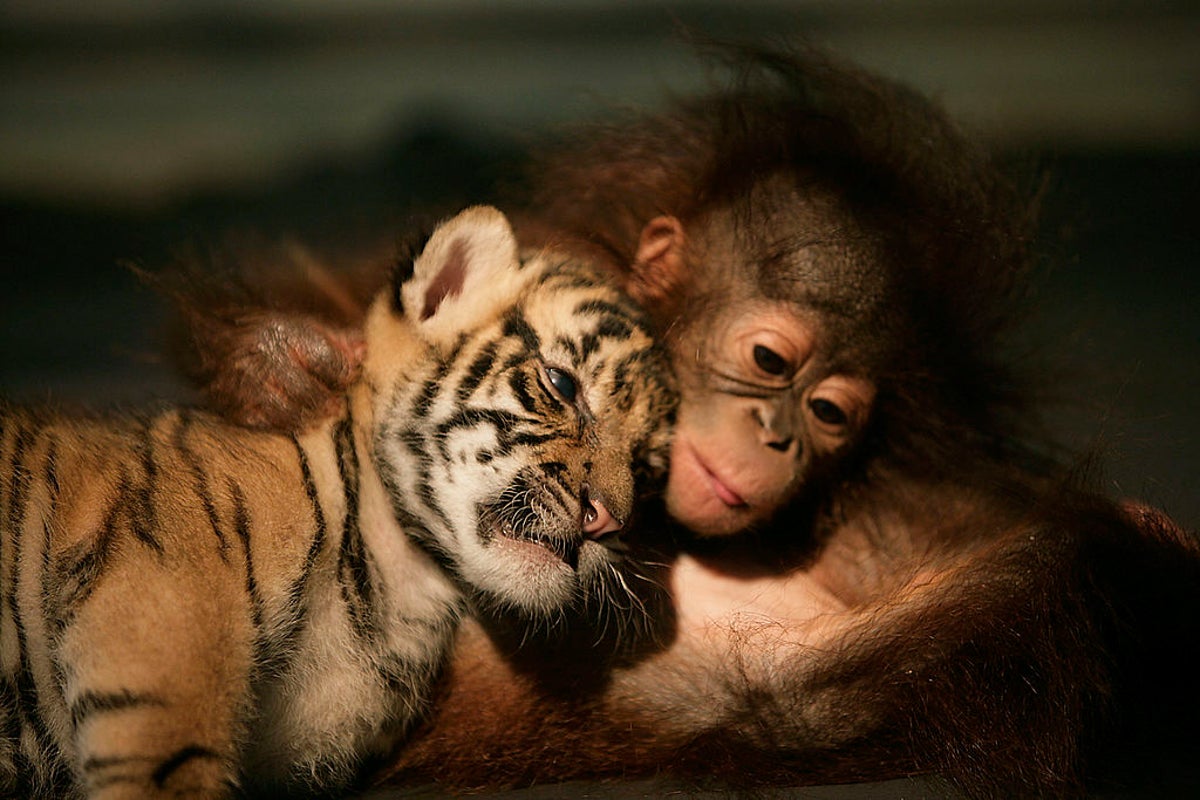
Study Finds Primates Frequently Form Interspecies Friendships
A new study reveals that primates engage in regular, non-predatory social interactions with a wide variety of other animal species. Researchers analyzed data across 88 primate species to document these surprising cross-species bonds.
A recent scientific review has documented that primates are far more socially diverse than previously understood, frequently forming friendships with animals outside of their own species. By examining 88 different primate species, researchers identified interactions with 127 other animal species, ranging from birds and reptiles to other mammals. These relationships often extend beyond simple coexistence, with many instances showing cooperative or friendly behavior that does not involve hunting or competition for resources.
The findings challenge the traditional view that primate social structures are primarily focused on intra-species bonding. While the study highlights the prevalence of these connections, it notes that the nature of these friendships varies significantly depending on the environment and the specific species involved. Some interactions appear to be based on mutual benefits, such as shared protection from predators, while others seem to be purely social in nature. The research team suggests that these interspecies bonds may play a larger role in the evolutionary success and behavioral complexity of primates than previously recognized. By cataloging these 215 total species involved in such interactions, the study provides a broad overview of how primates navigate their ecosystems through social networking that crosses biological boundaries.
📡 Media Analysis
How each outlet framed the story — angles, word choices, and what they chose to push or ignore.
Focused on the novelty of the discovery to highlight the emotional or social intelligence of primates.
"surprising friendships"
✓ Only outlet to report: Provided the specific data points of 88 primate species and 127 other animal species.
🔍 What Nobody's Reporting
- ·Lack of information regarding the methodology used to define a 'friendship' versus a casual interaction.
- ·No mention of whether these interactions are more common in captivity versus the wild.
📰 Sources
0 A-rated source(s) among 1 total. Lowest trust: The Independent (B)