
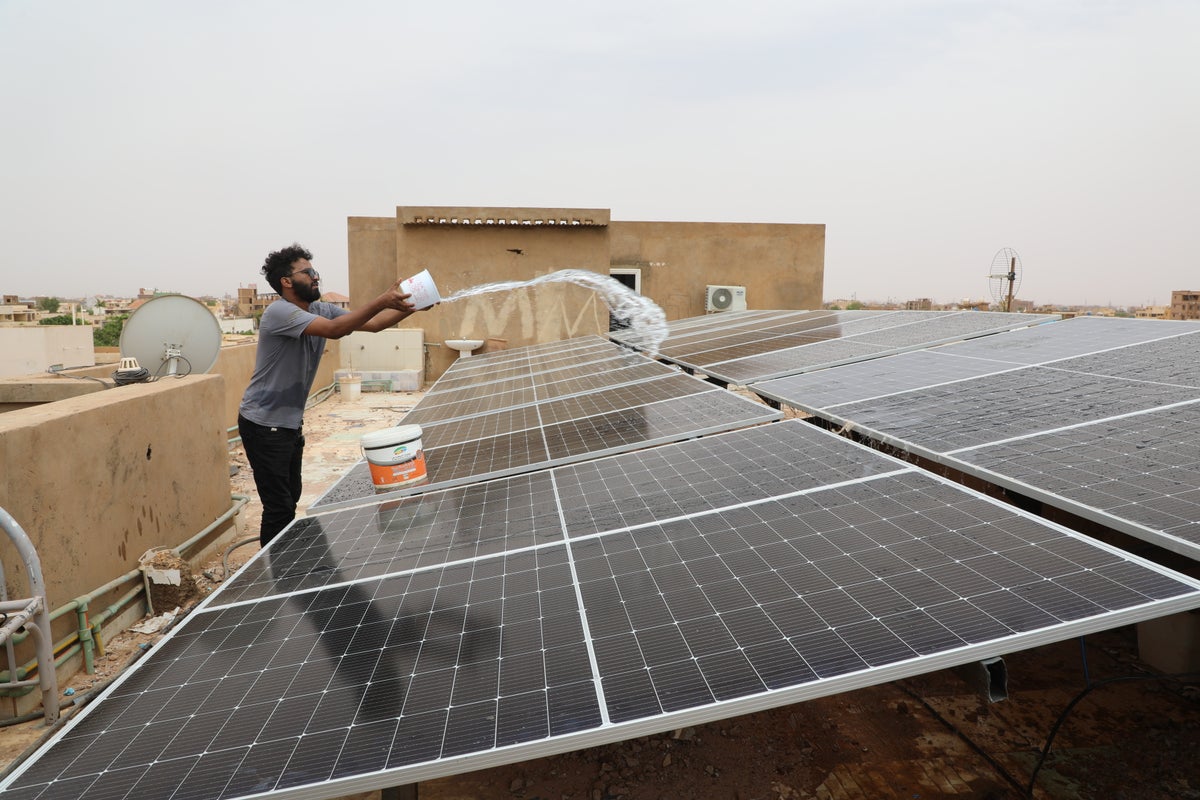
Sudanese residents turn to solar power amid ongoing conflict-related blackouts
As the conflict in Sudan continues to cause widespread power outages, residents are increasingly adopting solar energy as a survival strategy. However, the high cost of equipment remains a significant barrier for many families.
The ongoing war in Sudan has severely damaged the nation's electrical infrastructure, leading to frequent and prolonged blackouts across the country. In response to the loss of reliable grid power, many residents are attempting to transition to solar energy systems to maintain basic household functions. This shift is driven by the necessity of keeping essential appliances running during a period of extreme instability.
Despite the growing interest in renewable energy, the transition is not accessible to everyone. The cost of solar panels, batteries, and installation equipment has become prohibitively expensive for the average Sudanese household. Economic inflation and supply chain disruptions caused by the conflict have further inflated prices, leaving a large portion of the population without a viable alternative to the failing power grid. While solar energy is being framed as a practical solution for those who can afford it, the current situation highlights a deepening divide between those who can secure independent power and those who remain entirely dependent on the crumbling national infrastructure.
📡 Media Analysis
How each outlet framed the story — angles, word choices, and what they chose to push or ignore.
Highlighted the grassroots adaptation to a crisis while emphasizing the economic inequality of the solution.
"war-driven blackouts"
🔍 What Nobody's Reporting
- ·Lack of data regarding the current percentage of the population still connected to the grid.
- ·No mention of government or international aid programs aimed at subsidizing solar energy for civilians.
📰 Sources
0 A-rated source(s) among 1 total. Lowest trust: The Independent (B)