
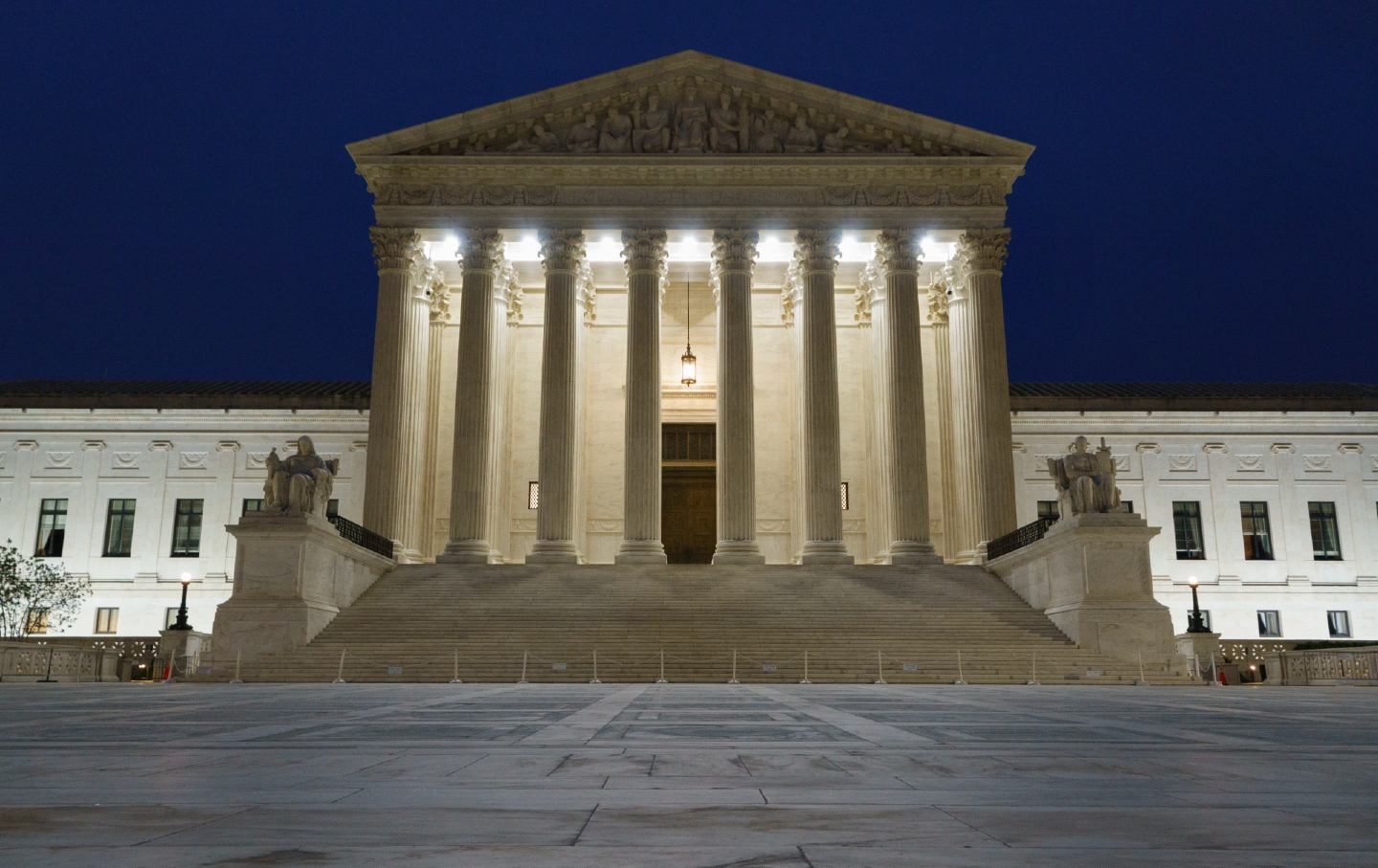
Supreme Court Ruling on Mail-in Voting Restrictions Sparks Debate
The Supreme Court has issued a ruling that allows certain restrictions on mail-in voting to remain in place. Critics argue this decision unfairly influences election outcomes, while supporters maintain the court is upholding legal standards for election integrity.
The Supreme Court recently declined to intervene in a case regarding state-level restrictions on mail-in voting, effectively allowing those limitations to stand ahead of the midterm elections. The decision has reignited a national conversation about the balance between election security and voter access.
Legal analysts and political commentators are divided on the implications of the Court's inaction. Some observers, particularly those aligned with progressive viewpoints, argue that the Court is providing a tactical advantage to Donald Trump and his allies by permitting voting rules that may disproportionately affect certain demographics. These critics contend that such restrictions are constitutionally questionable and serve to suppress voter turnout in ways that favor specific political outcomes.
Conversely, proponents of the restrictions argue that the Court is correctly deferring to state legislatures, which hold the primary authority to set election procedures. From this perspective, the ruling is not a political maneuver but a procedural adherence to the principle that states should manage their own electoral processes to ensure security and prevent fraud. The disagreement centers on whether the Court’s refusal to act constitutes a neutral application of the law or a tacit endorsement of policies that alter the competitive landscape of the midterms.
📡 Media Analysis
How each outlet framed the story — angles, word choices, and what they chose to push or ignore.
Framed the court's inaction as a deliberate, partisan effort to manipulate election results.
"rig the midterms"
✓ Only outlet to report: Explicitly characterized the court's decision as a direct effort to assist Donald Trump's political strategy.
⚡ Where Sources Disagree
- ·Whether the Court's inaction is a neutral procedural decision or a partisan political act.
- ·Whether the specific mail-in voting restrictions are constitutionally valid.
🔍 What Nobody's Reporting
- ·Lack of specific details regarding which state's laws were being challenged.
- ·Absence of the legal reasoning provided by the Supreme Court in their order.
📰 Sources
0 A-rated source(s) among 1 total. Lowest trust: The Nation (B)