
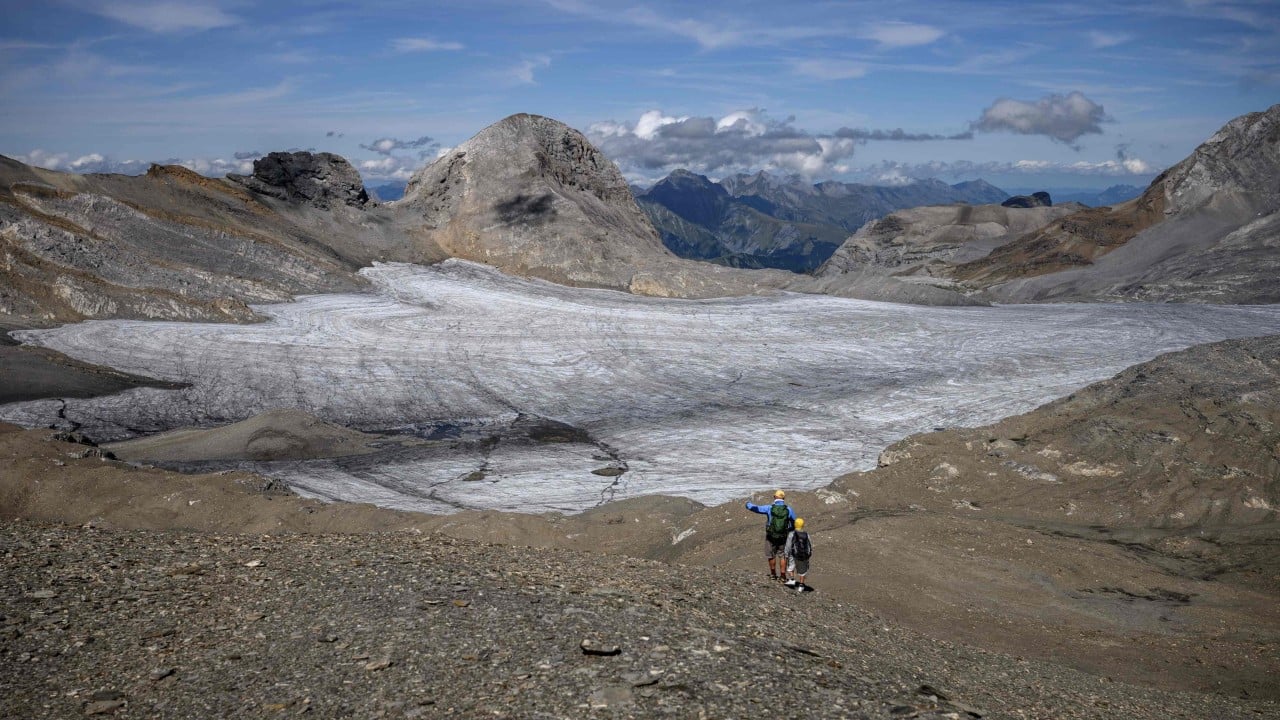
Swiss Glaciers Lose 20 Percent of Mass Over Five-Year Period
A new study from the Glacier Monitoring in Switzerland (GLAMOS) network reports that Swiss glaciers have lost nearly 20% of their total volume in the last five years. Experts attribute this rapid decline to a combination of record-breaking summer temperatures and insufficient winter snowfall.
According to data released by the Glacier Monitoring in Switzerland (GLAMOS) network, the country's glaciers are experiencing a period of accelerated melting. The report indicates that in the last five years alone, these glaciers have lost approximately 20% of their total mass. The most recent data for 2026 shows that the glaciers lost 5.5% of their volume in a single year, marking the second-largest annual melt on record.
Experts state that this trend is driven by a climate-related pattern of extreme summer heat followed by winters with historically low snowfall. The lack of winter snow prevents the glaciers from replenishing their ice reserves, leaving them vulnerable to the intense heat of the summer months. The findings highlight a significant environmental shift, as the rate of loss has remained consistently high over the half-decade period. While the report focuses on the physical measurements of the ice loss, it underscores the broader impact of climate change on the Swiss landscape, noting that these glaciers are being affected at a rate disproportionate to other global regions.
📡 Media Analysis
How each outlet framed the story — angles, word choices, and what they chose to push or ignore.
Focused on the scientific data and the urgency of the environmental trend.
"disproportionately impacted"
🔍 What Nobody's Reporting
- ·Lack of perspective from climate skeptics or alternative scientific viewpoints regarding the cause of the melt.
- ·No mention of the potential economic or infrastructure consequences for Switzerland resulting from this loss.
📰 Sources
0 A-rated source(s) among 1 total. Lowest trust: SCMP (B)