
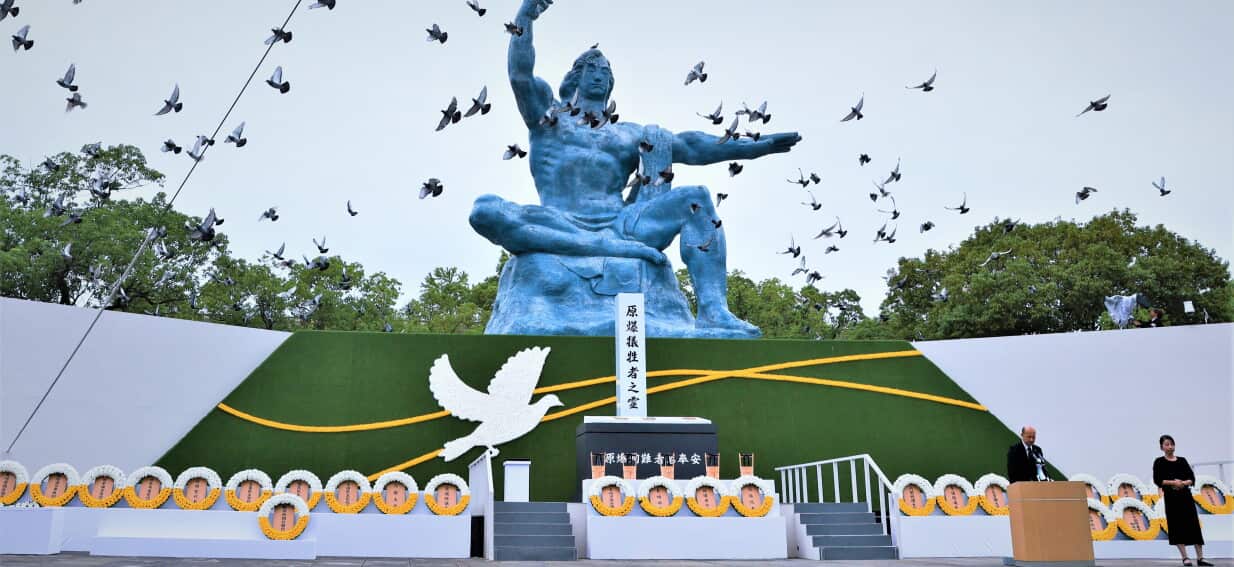
Tensions rise between Nagasaki and Tokyo over Japan's nuclear policy stance
Nagasaki Mayor Shiro Suzuki has publicly criticized the Japanese government for its perceived shift away from traditional non-nuclear principles. The tension centers on Tokyo's refusal to formally commit to long-standing anti-nuclear pledges as global security concerns evolve.
A growing diplomatic rift has emerged between the municipal government of Nagasaki and the central government in Tokyo regarding Japan's nuclear policy. Nagasaki Mayor Shiro Suzuki has recently voiced strong opposition to what he describes as a subtle but concerning shift in Tokyo’s commitment to its historical non-nuclear stance. Mayor Suzuki, representing a city uniquely impacted by the legacy of nuclear warfare, continues to characterize nuclear weapons as an 'absolute evil' that must be abolished.
In contrast, the administration in Tokyo has increasingly avoided explicit commitments to the non-nuclear principles that have defined Japan’s post-war security policy. While the government has not officially abandoned these principles, its refusal to reaffirm them in recent policy discussions has sparked alarm among local leaders in cities like Nagasaki. The central government appears to be balancing these historical commitments against the current geopolitical climate, which includes rising regional security threats.
While the core facts of the disagreement are clear, the two sides differ significantly on the interpretation of the policy shift. Nagasaki officials view the government’s silence as a betrayal of Japan’s pacifist identity, whereas Tokyo’s approach suggests a move toward strategic ambiguity. The central government has yet to issue a detailed public rebuttal to Mayor Suzuki’s specific criticisms, leaving the exact nature of the policy change open to interpretation by international observers and domestic stakeholders alike.
📡 Media Analysis
How each outlet framed the story — angles, word choices, and what they chose to push or ignore.
Framed the story as a clash between local moral advocacy and national security pragmatism.
"absolute evil"
⚡ Where Sources Disagree
- ·Whether the government's silence constitutes a formal policy shift or a strategic necessity.
- ·The extent to which historical non-nuclear principles remain compatible with current regional security threats.
🔍 What Nobody's Reporting
- ·Lack of specific quotes or policy documents from the Tokyo administration explaining their rationale.
- ·Absence of perspective from Hiroshima, which typically aligns with Nagasaki on these issues.
📰 Sources
0 A-rated source(s) among 1 total. Lowest trust: SBS News (B)