
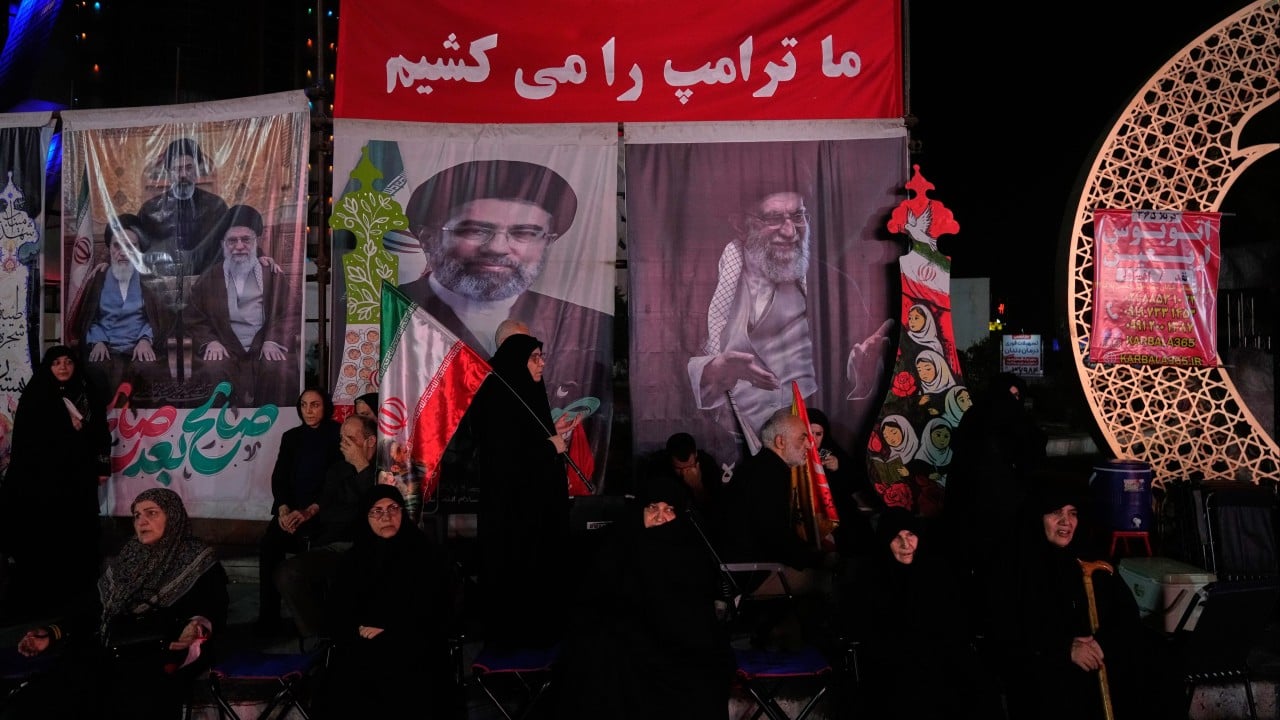
Trump Announces New Economic Sanctions Campaign Targeting Nations Supporting Iran
President Donald Trump has launched a new economic pressure campaign against Iran, threatening severe penalties for any country or business that continues to provide financial support to the regime. This move follows the expiration of a 60-day ceasefire and the collapse of recent diplomatic efforts to resolve the ongoing conflict.
Market Narrative Detected
The media is framing this as a high-stakes geopolitical standoff, which benefits the administration by signaling strength to voters while potentially creating volatility in energy markets that traders can exploit.
President Donald Trump announced a significant escalation in U.S. economic policy toward Iran this Wednesday, characterizing the new initiative as a form of "economic warfare." The administration has warned that any nation or private entity that facilitates financial lifelines to the Iranian government will face "unprecedented" and "tremendous" economic consequences.
This policy shift marks a departure from recent diplomatic attempts to de-escalate tensions. According to reports from the Washington Examiner, the administration has explicitly backed away from peace talks that had been ongoing for nearly six months. The BBC and SCMP note that this announcement follows the expiration of a 60-day ceasefire earlier this week, with no clear diplomatic or military resolution currently in sight.
While the administration frames this as a necessary measure to isolate the Iranian regime, the move has drawn attention to the broader geopolitical instability in the region. SCMP highlights that the conflict has significantly impacted the Strait of Hormuz, a critical maritime chokepoint for global energy supplies. Furthermore, the timing of this announcement has prompted speculation regarding the influence of the upcoming November election on U.S. foreign policy. While all outlets agree on the core threat of sanctions, the Washington Examiner specifically frames the initiative as an "economic D-Day," whereas other outlets like NDTV and the BBC use more neutral language to describe the administration's stated goals.
📡 Media Analysis
How each outlet framed the story — angles, word choices, and what they chose to push or ignore.
Focused on the aggressive nature of the threat to project strength.
"economic warfare"
Used militaristic metaphors to frame the economic policy as a decisive battle.
"economic D-Day"
✓ Only outlet to report: Reported that the administration explicitly backed away from peace talks this week.
Provided a straightforward, neutral account of the President's statement.
"tremendous punishment"
Connected the economic threats to the broader context of the Strait of Hormuz and the upcoming election.
"significantly choked-off"
✓ Only outlet to report: Highlighted the impact on the Strait of Hormuz and the domestic political pressure of the November election.
Focused on the timeline of the conflict and the failure of the ceasefire.
"no sign of a diplomatic or military off-ramp"
🔍 What Nobody's Reporting
- ·Lack of detail on which specific nations or industries are currently providing the 'financial lifeline' being targeted.
- ·No analysis of how these sanctions might impact global oil prices or domestic inflation in the U.S.
- ·Absence of comment from the Iranian government or international bodies regarding the legality of these secondary sanctions.
📰 Sources
1 A-rated source(s) among 5 total. Lowest trust: Fox News (C)