
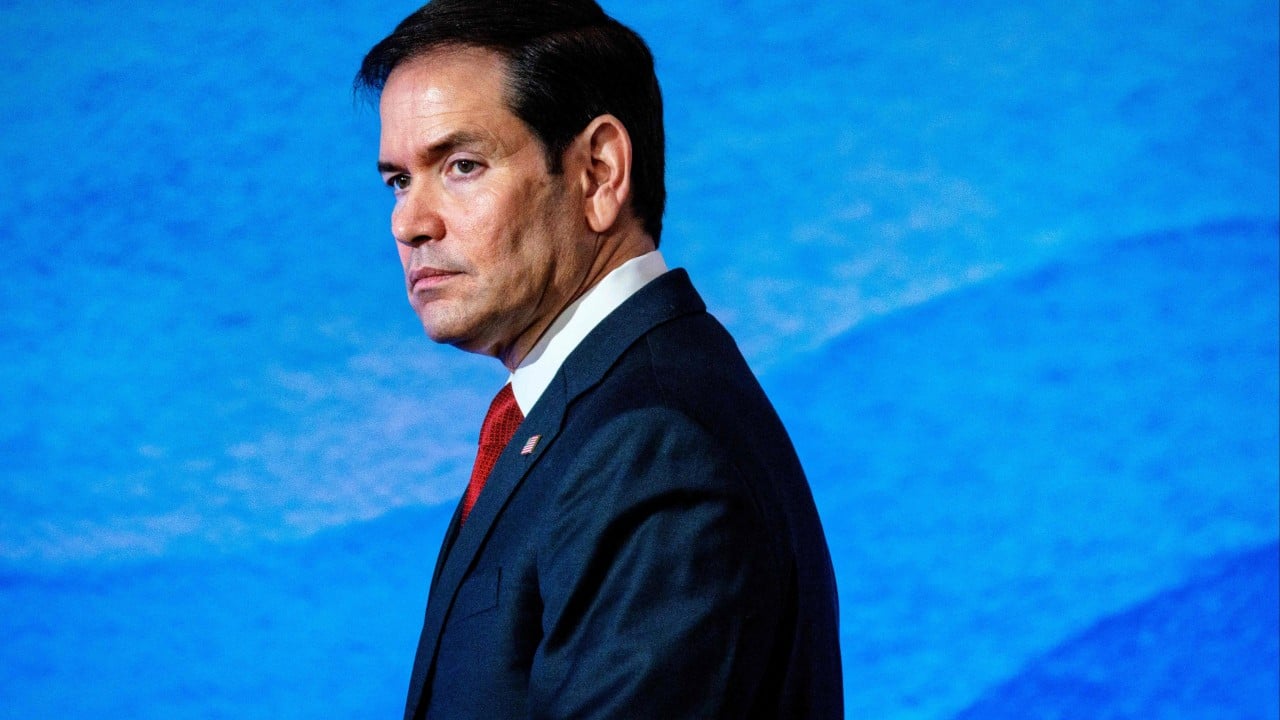
U.S. Stance on International Law Faces Scrutiny Over Conflicting Applications
Recent U.S. policy actions have drawn criticism for appearing to apply international legal standards inconsistently. While the U.S. has challenged the authority of the International Criminal Court, it simultaneously advocates for adherence to maritime rulings in the South China Sea.
The United States is currently facing accusations of applying international law selectively, according to a report from the South China Morning Post. The critique centers on two distinct foreign policy actions taken by Washington. First, the U.S. has expressed strong opposition to the International Criminal Court (ICC), characterizing the institution as a threat to American sovereignty. This stance suggests a rejection of the court's jurisdiction over U.S. interests.
Conversely, the U.S. recently led a coalition of 14 nations in a joint statement affirming the validity of a decade-old arbitration ruling regarding the South China Sea. This ruling, based on international maritime law, is used by the U.S. to challenge territorial claims in the region. Critics argue that these two positions are fundamentally contradictory: the U.S. appears to reject international judicial oversight when it pertains to its own actions or those of its allies, while actively promoting the enforcement of international legal rulings when they align with its geopolitical objectives in the Pacific. The report frames this as a form of 'hegemony' that allows the U.S. to operate under different rules than those it expects other nations to follow.
📡 Media Analysis
How each outlet framed the story — angles, word choices, and what they chose to push or ignore.
Argues that U.S. foreign policy is hypocritical by highlighting contradictory stances on international legal institutions.
"America declares international law for thee but not for me"
⚡ Where Sources Disagree
- ·Whether the U.S. rejection of the ICC and support for South China Sea maritime law are legally reconcilable or inherently hypocritical.
🔍 What Nobody's Reporting
- ·Lack of comment or official justification from U.S. government representatives regarding their specific legal reasoning for these positions.
- ·Absence of context regarding the specific legal arguments the U.S. uses to distinguish between ICC jurisdiction and maritime arbitration.
📰 Sources
0 A-rated source(s) among 1 total. Lowest trust: SCMP (B)