
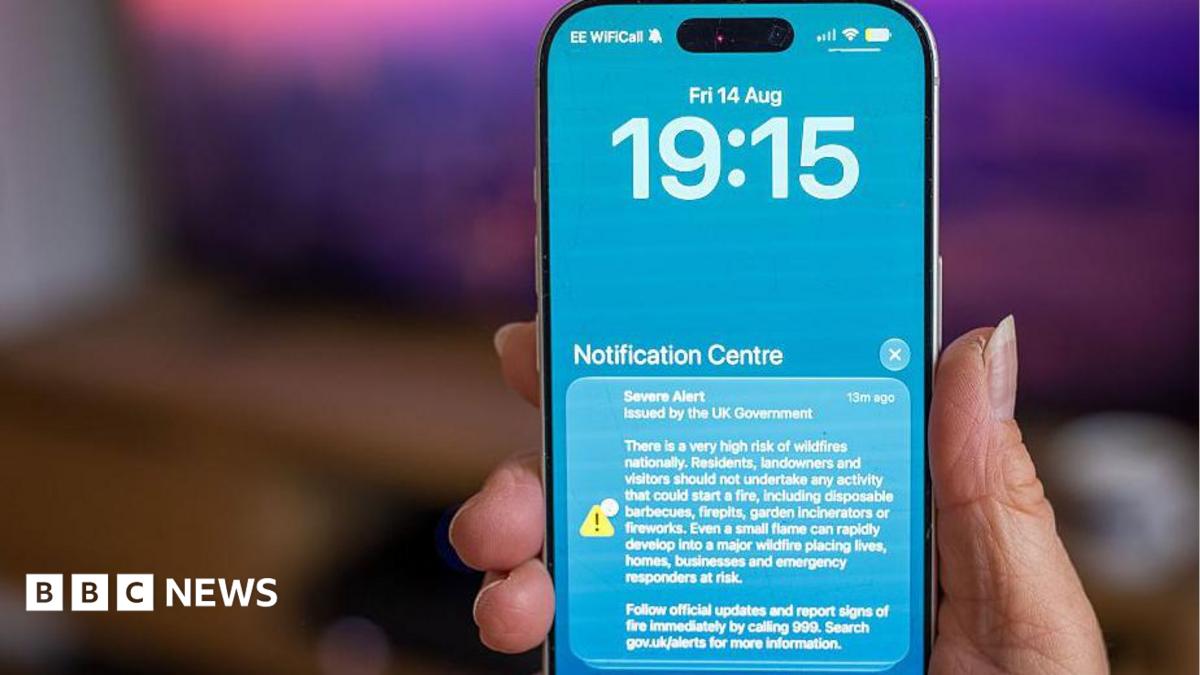
UK Emergency Alert System Raises Concerns for Domestic Abuse Victims
The UK government’s recent nationwide emergency phone alert test has drawn criticism from advocacy groups. Campaigners argue that the loud, unexpected notification could inadvertently compromise the safety of individuals hiding secret mobile phones from abusive partners.
On Friday night, millions of mobile phones across the United Kingdom received a loud, unexpected emergency alert as part of a government test of its new public warning system. While the government intended the test to ensure the system functions for major emergencies, domestic abuse charities and campaigners have raised significant concerns regarding the safety of vulnerable individuals.
Advocacy groups point out that many victims of domestic abuse keep secondary, hidden mobile phones to maintain contact with support services or family members without their abusers' knowledge. Because the alert was broadcast to all compatible devices, these hidden phones sounded the alarm simultaneously, potentially revealing their existence to abusers. Campaigners argue that this creates a direct risk of retaliation or violence for those who had successfully kept their devices concealed.
While the government has not yet issued a formal response to these specific safety concerns, the incident has sparked a broader debate about the design of public warning systems. Critics suggest that the government failed to adequately consider how the mandatory nature of the alert—which overrides silent settings—could impact those in precarious domestic situations. The BBC reports that the surprise nature of the alert was a key factor in the potential danger, as users had little time to prepare or silence devices that were intended to remain undetected.
📡 Media Analysis
How each outlet framed the story — angles, word choices, and what they chose to push or ignore.
Highlighted the unintended negative consequences of a government initiative on a vulnerable population.
"put vulnerable people at risk"
⚡ Where Sources Disagree
- ·Whether the government's public awareness campaign prior to the test was sufficient to mitigate risks for those with hidden devices.
🔍 What Nobody's Reporting
- ·The government's official rationale or safety protocols, if any, that were established prior to the test to protect vulnerable groups.
- ·Data or anecdotal evidence regarding the actual number of incidents reported to charities following the alert.
📰 Sources
1 A-rated source(s) among 1 total. Lowest trust: BBC News (A)