
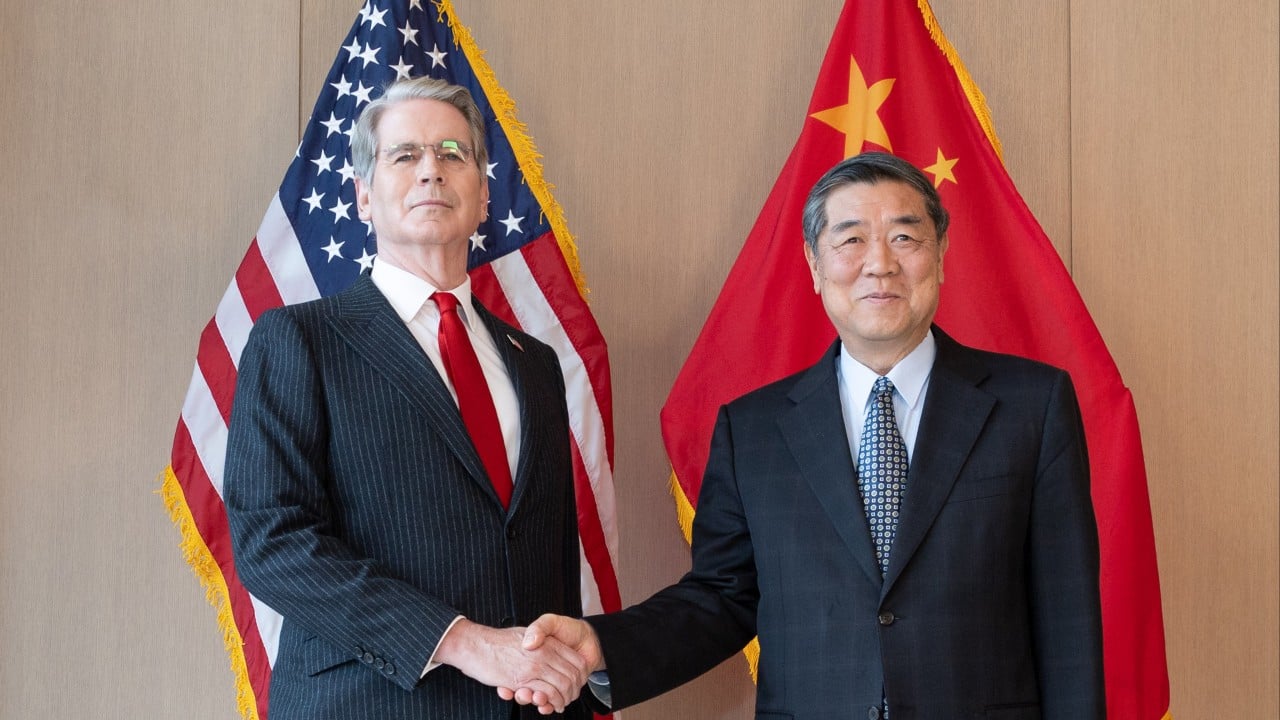
US and China Establish AI Dialogue to Manage Global Tech Risks
The United States and China have agreed to launch an official AI dialogue, including a proposed threat-notification system, to mitigate potential risks. Despite this cooperation, experts warn that ongoing tensions over trade and technology dominance may hinder the effectiveness of these talks.
Following high-level meetings in New York between US Treasury Secretary Scott Bessent, US Trade Representative Jamieson Greer, and Chinese Vice-Premier He Lifeng, the two nations have committed to an official dialogue regarding artificial intelligence. The primary goal of this initiative is to establish a threat-notification system designed to prevent a global crisis stemming from AI-related incidents. This development is viewed by many analysts as a pragmatic effort to introduce guardrails into the competitive relationship between the world's two largest economies.
However, the long-term success of this dialogue remains uncertain. While the agreement signals a willingness to cooperate on safety, deep-seated disagreements persist regarding critical areas of the tech sector. Specifically, ongoing disputes over semiconductor chip access, the control of AI model distillation techniques, and broader concerns about market dominance continue to create friction. Analysts suggest that these structural divisions may limit the scope and impact of the AI safety talks, as both nations remain heavily invested in a broader technological rivalry. The agreement represents a rare instance of diplomatic coordination in a landscape otherwise defined by restrictive trade policies and strategic competition.
📡 Media Analysis
How each outlet framed the story — angles, word choices, and what they chose to push or ignore.
Framed the agreement as a necessary but fragile attempt to manage competition in the tech sector.
"pragmatic step towards crisis prevention"
🔍 What Nobody's Reporting
- ·Lack of specific details on the technical mechanisms of the proposed threat-notification system.
- ·Absence of input from independent AI safety experts regarding the feasibility of US-China cooperation.
- ·No mention of how other global powers or international bodies view this bilateral agreement.
📰 Sources
0 A-rated source(s) among 1 total. Lowest trust: SCMP (B)