
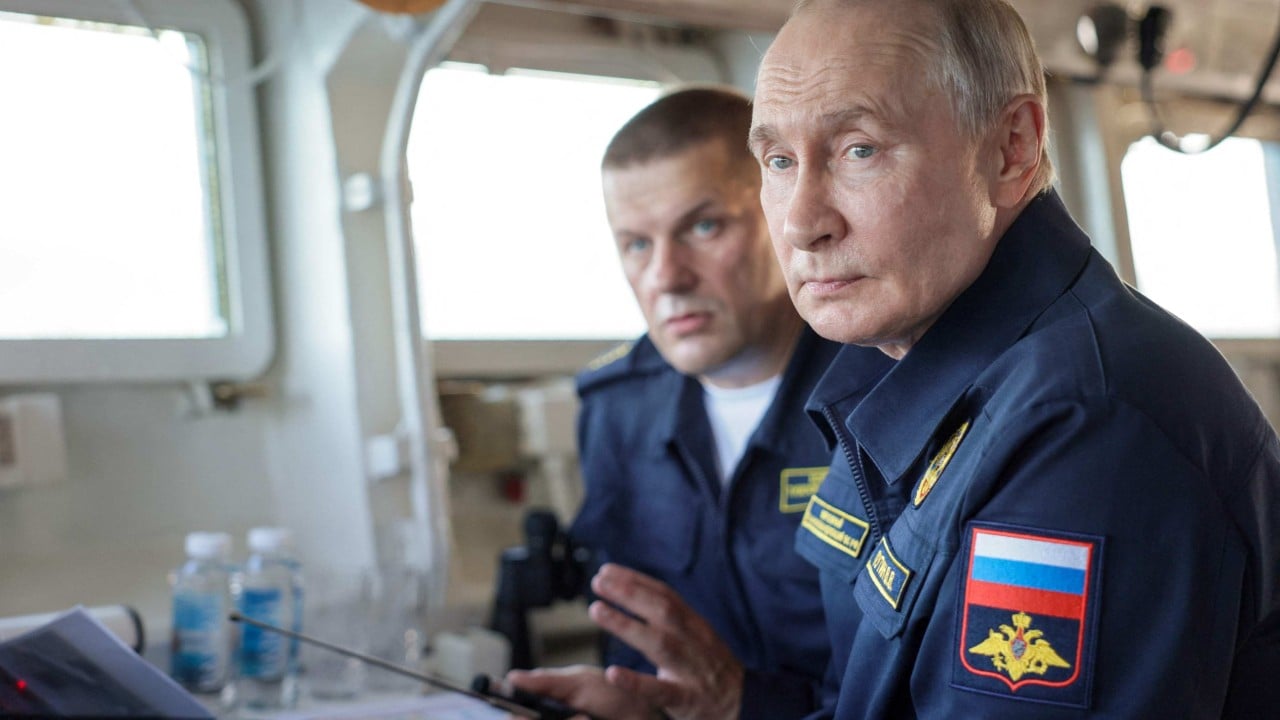
Vladimir Putin makes first official visit to disputed Kuril Islands
Russian President Vladimir Putin visited the Kuril Islands on Thursday, marking his first trip to the territory since taking office. The visit prompted a formal protest from Japan, which claims the islands as its own.
Russian President Vladimir Putin traveled to the Kuril Islands on Thursday, a visit that represents the first time he has set foot on the territory during his presidency. The islands, which are located near Japan’s northernmost island of Hokkaido, have been a source of long-standing diplomatic tension between Moscow and Tokyo. The Soviet Union seized the islands in 1945 at the end of World War II, and Japan continues to claim them as its "Northern Territories."
Following the visit, the Japanese government issued a formal protest. While the Kremlin released video footage showing the Russian leader touring a fish-processing plant and sampling caviar, the diplomatic fallout remains the primary focus of international observers. The visit serves as a symbolic assertion of Russian sovereignty over the region, directly challenging Japan's historical claims. Both SCMP and France24 agree on the fundamental facts of the visit and the subsequent Japanese protest, though they differ slightly in their descriptions of the islands' status; SCMP refers to them as "contested," while France24 labels them "disputed."
📡 Media Analysis
How each outlet framed the story — angles, word choices, and what they chose to push or ignore.
Focused on the specific activities of the visit, such as the fish-processing plant tour.
"dogged by tensions"
✓ Only outlet to report: Reported that Putin was given caviar during his visit to a fish-processing plant.
Emphasized the geographic proximity to Japan to highlight the diplomatic friction.
"sparking Japanese protest"
🔍 What Nobody's Reporting
- ·Lack of comment or official statement from the Russian Foreign Ministry regarding the Japanese protest.
- ·No historical context on why the islands are strategically important to Russia beyond the 1945 seizure.