
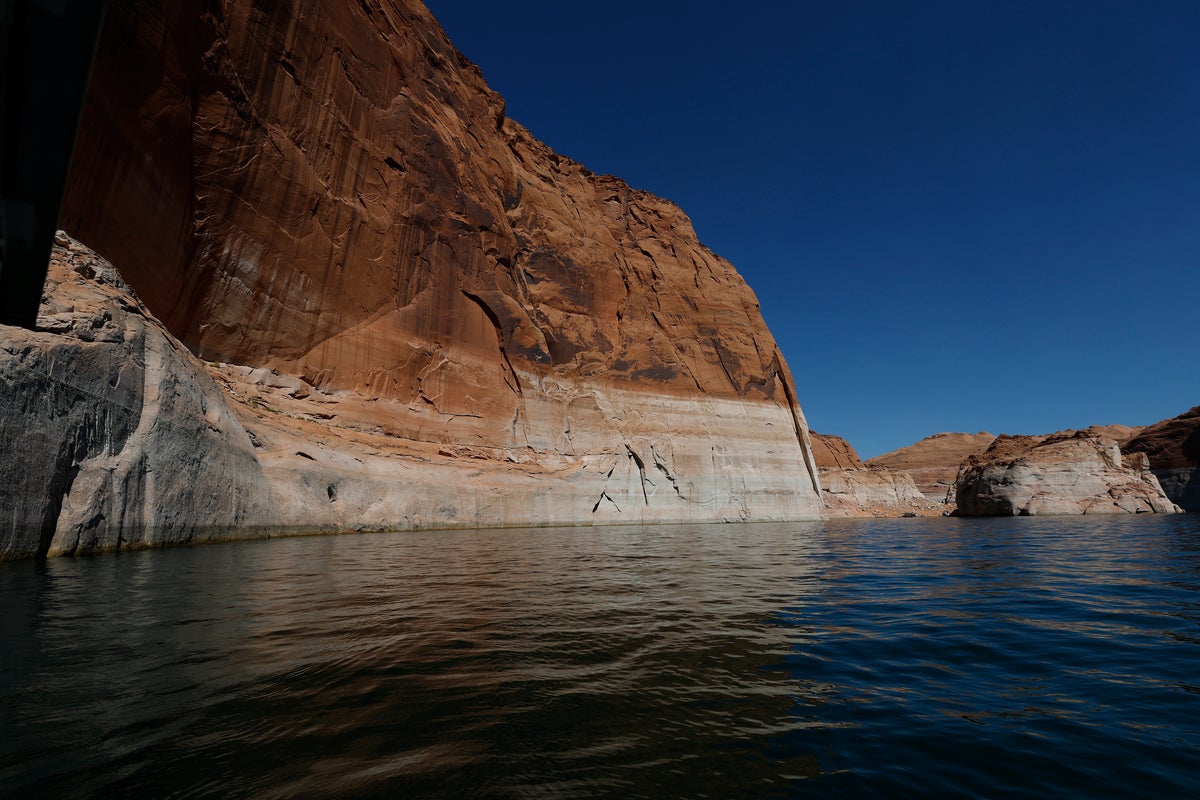
Water Levels at Lake Powell and Lake Mead Reach Historic Lows
Lake Powell and Lake Mead, the two largest reservoirs in the United States, have dropped to record-low water levels. This decline threatens the water supply for millions of people and raises concerns regarding regional electricity generation.
The United States is currently facing a significant water crisis as Lake Powell and Lake Mead, the nation's two largest reservoirs, have reached record-low water levels. These reservoirs are critical infrastructure, providing water and hydroelectric power to approximately 35 to 40 million people across the American West.
The drop in water levels is primarily attributed to prolonged drought conditions and increased demand. As the water surface elevation decreases, the ability of hydroelectric dams to generate power is compromised. This has sparked concerns among energy officials and local governments about the stability of the regional power grid. If water levels continue to fall, the turbines responsible for generating electricity may be forced to shut down, potentially impacting millions of residents who rely on this power source.
While the situation is widely acknowledged as a severe environmental and infrastructure challenge, there is ongoing debate regarding the long-term management of the Colorado River basin. Some experts argue that current water usage agreements are outdated and fail to account for the reality of a drier climate. Others emphasize the need for immediate conservation efforts and infrastructure investment to mitigate the risk of a total supply failure. The situation remains fluid, with federal agencies monitoring the levels closely to determine if emergency water releases or further usage restrictions are necessary to maintain grid reliability.
📡 Media Analysis
How each outlet framed the story — angles, word choices, and what they chose to push or ignore.
Focused on the immediate threat to infrastructure and the scale of the population affected.
"putting electricity supply at risk"
⚡ Where Sources Disagree
- ·There are no direct contradictions in the provided source, as only one source was analyzed.
🔍 What Nobody's Reporting
- ·Lack of specific data on current water elevation levels compared to historical averages.
- ·Absence of proposed policy solutions or government responses currently in progress.
- ·No mention of the specific states or regions most vulnerable to the potential power outages.
📰 Sources
0 A-rated source(s) among 1 total. Lowest trust: The Independent (B)