
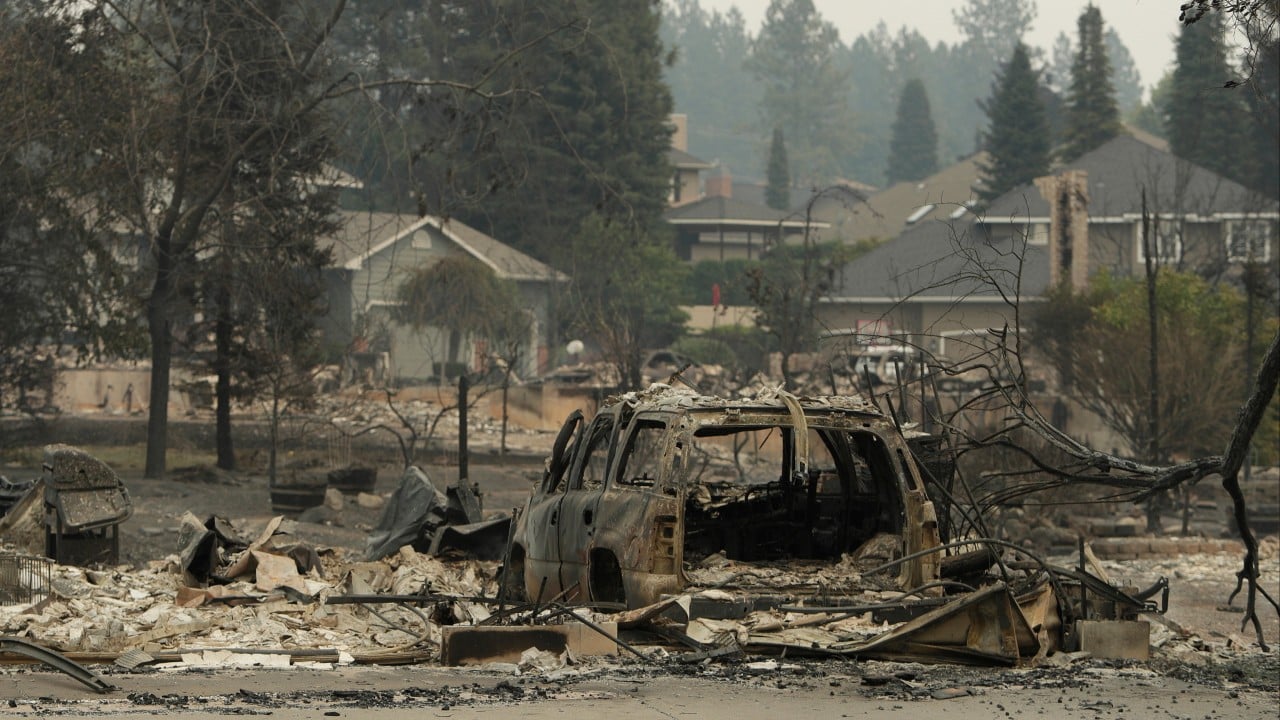
Wildfires in Eastern Washington Force Mass Evacuations and Destroy Hundreds of Structures
Wildfires near Spokane, Washington, have destroyed at least 600 structures and forced the evacuation of 60,000 residents. The fires are part of a broader series of blazes across the western United States that are currently straining firefighting resources.
Over the weekend, a series of wildfires broke out in and around Spokane, Washington, the state’s second-largest city. According to local authorities, the fires have consumed approximately 21 square kilometers (8.2 square miles) of land. The damage is significant, with at least 600 structures—including homes and businesses—reported as destroyed.
The scale of the emergency has necessitated the evacuation of 60,000 people from the affected areas. These fires are occurring during a period of high wildfire activity across the western United States, which has placed a heavy burden on federal, state, and local emergency response agencies. Officials report that a total of 1,000 square kilometers have burned across the region as agencies struggle to contain the multiple fronts.
While the immediate focus remains on containment and public safety, the situation highlights the ongoing challenges faced by emergency services during peak fire season. The combination of rapid fire spread and the high number of displaced residents has created a complex logistical situation for local authorities as they work to manage the crisis and assess the full extent of the property damage.
📡 Media Analysis
How each outlet framed the story — angles, word choices, and what they chose to push or ignore.
Provided a straightforward, high-level summary of the disaster's scale and the strain on resources.
"stretched the ability of federal, state and local agencies"
🔍 What Nobody's Reporting
- ·Lack of information regarding the specific cause of the fires.
- ·No mention of current containment percentages or weather conditions contributing to the spread.
📰 Sources
0 A-rated source(s) among 1 total. Lowest trust: SCMP (B)