
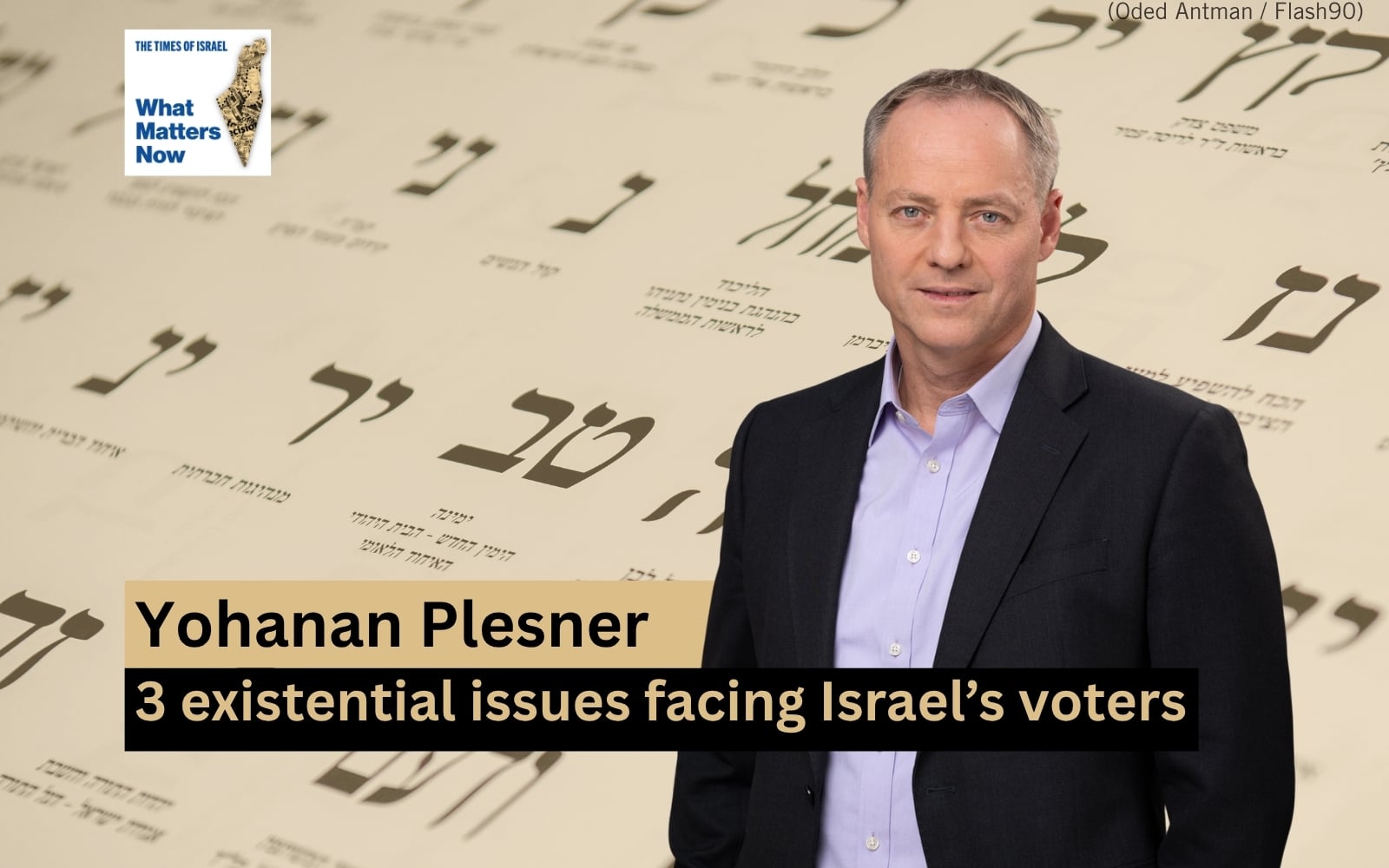
Yohanan Plesner Identifies Three Existential Challenges for Israeli Voters
Yohanan Plesner, president of the Israel Democracy Institute, has identified three core issues he believes are existential threats to Israel's political stability. He warns that without significant shifts in political behavior, the nation risks entering another cycle of inconclusive elections.
Yohanan Plesner, the president of the Israel Democracy Institute (IDI), has publicly outlined three primary issues that he characterizes as existential for the Israeli electorate. According to Plesner, the current political landscape is fraught with structural instability that threatens the functionality of the state. He argues that the country is currently on a trajectory toward further electoral deadlock, which could paralyze governance and prevent the implementation of necessary policy reforms.
A central component of Plesner’s analysis is the assertion that Israeli politicians must be willing to break previous campaign promises to address these systemic challenges. He suggests that the rigid adherence to pre-election commitments is currently preventing the formation of stable coalitions and hindering the government's ability to respond to national crises. By prioritizing political survival and narrow party interests over broader national needs, political leaders are, in his view, exacerbating the country's vulnerability.
While the specific details of the three issues were not fully elaborated in the initial report, the core of Plesner's argument rests on the necessity of political reform and a shift in how parties negotiate. He posits that the current system incentivizes fragmentation, making it increasingly difficult to achieve a governing majority. Plesner’s warning serves as a call for both the political class and the public to reconsider the current electoral framework, suggesting that the status quo is unsustainable. The analysis highlights a growing concern among policy experts regarding the long-term viability of Israel's democratic institutions if the current cycle of inconclusive elections continues unabated.
📡 Media Analysis
How each outlet framed the story — angles, word choices, and what they chose to push or ignore.
Highlighted the expert's warning about political instability while framing the solution as a need for politicians to break campaign promises.
"unless politicians' promises are broken"
✓ Only outlet to report: Identified the specific source as the president of the Israel Democracy Institute.
🔍 What Nobody's Reporting
- ·The article fails to define or list the 'three existential issues' mentioned in the headline.
- ·The report lacks any counter-perspective from political figures who might disagree with the necessity of breaking campaign promises.
📰 Sources
0 A-rated source(s) among 1 total. Lowest trust: Times of Israel (B)